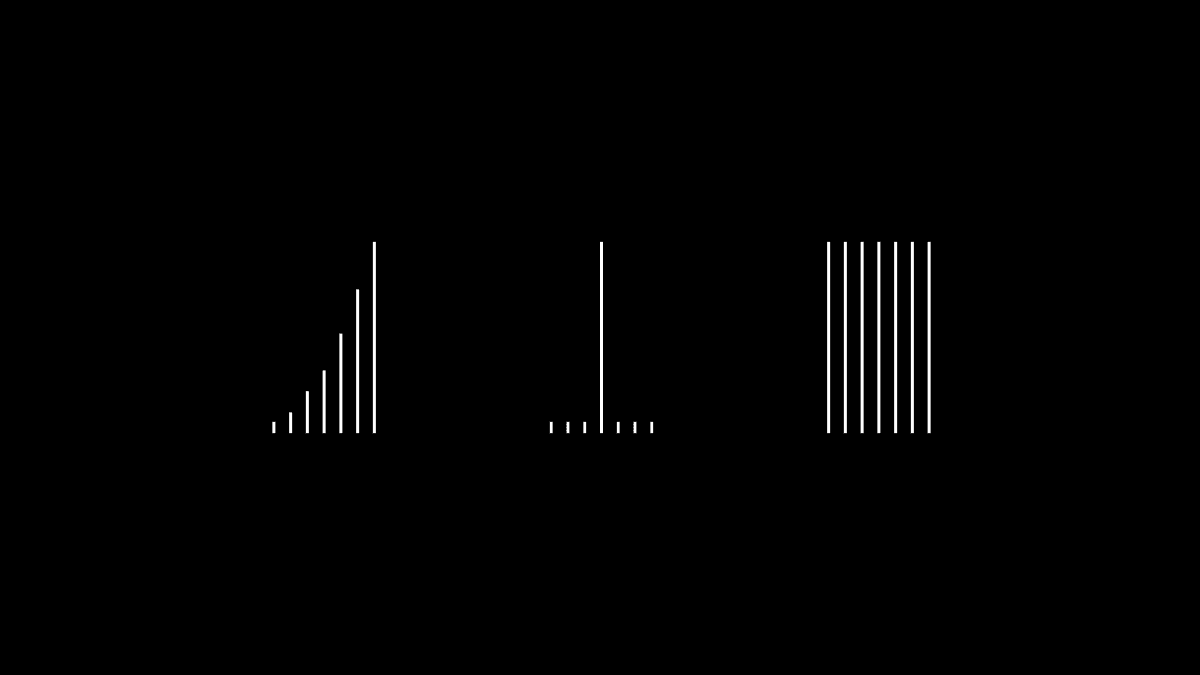
Work, Luck, Play brings three bodies of work into one presentation. Silk showed it at Art Basel Hong Kong in March 2026.
Its subject is how we account for outcomes. Some people say they earned them, some call it luck, and some treat the whole thing as a game. The three parts take those stories one at a time.
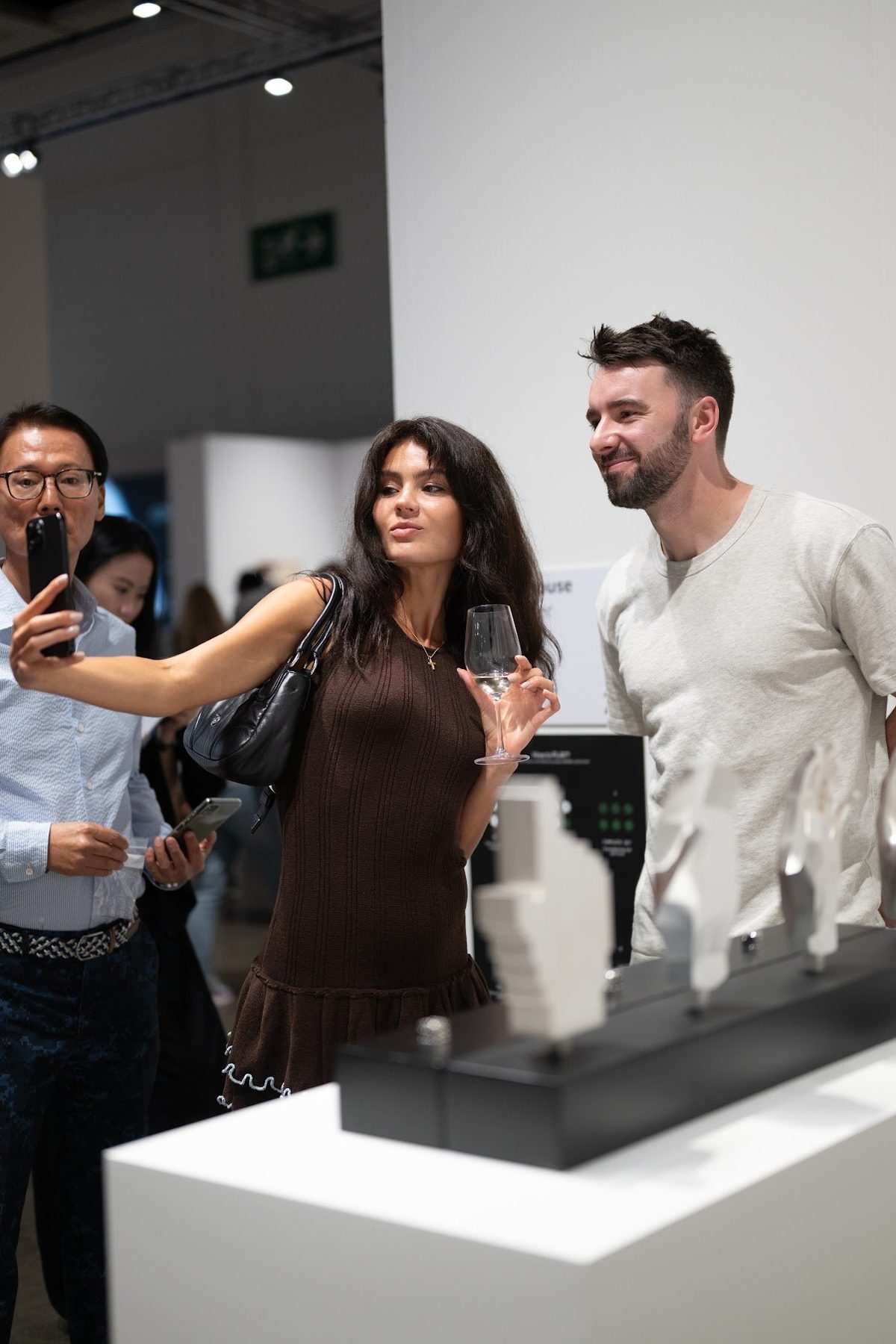
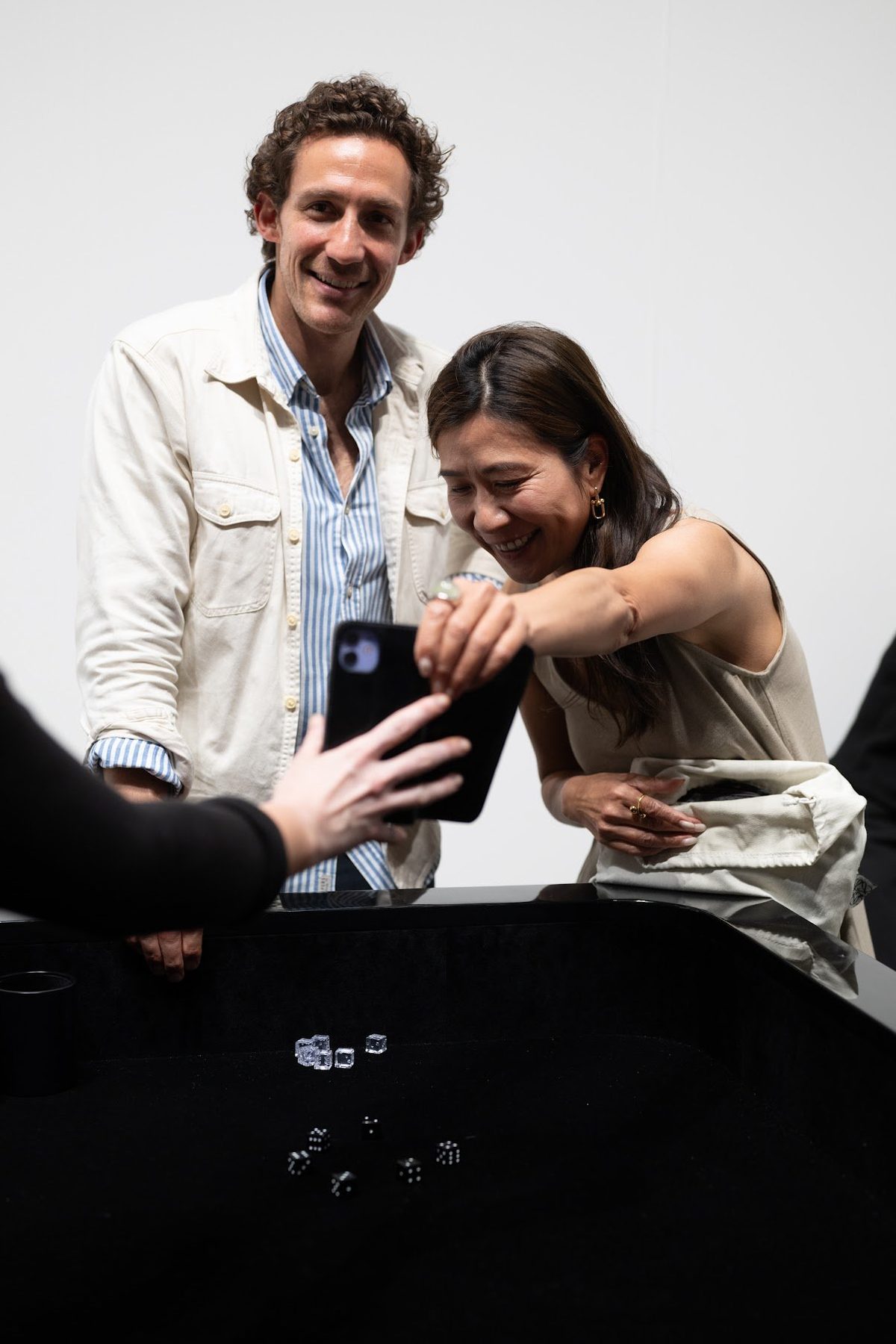
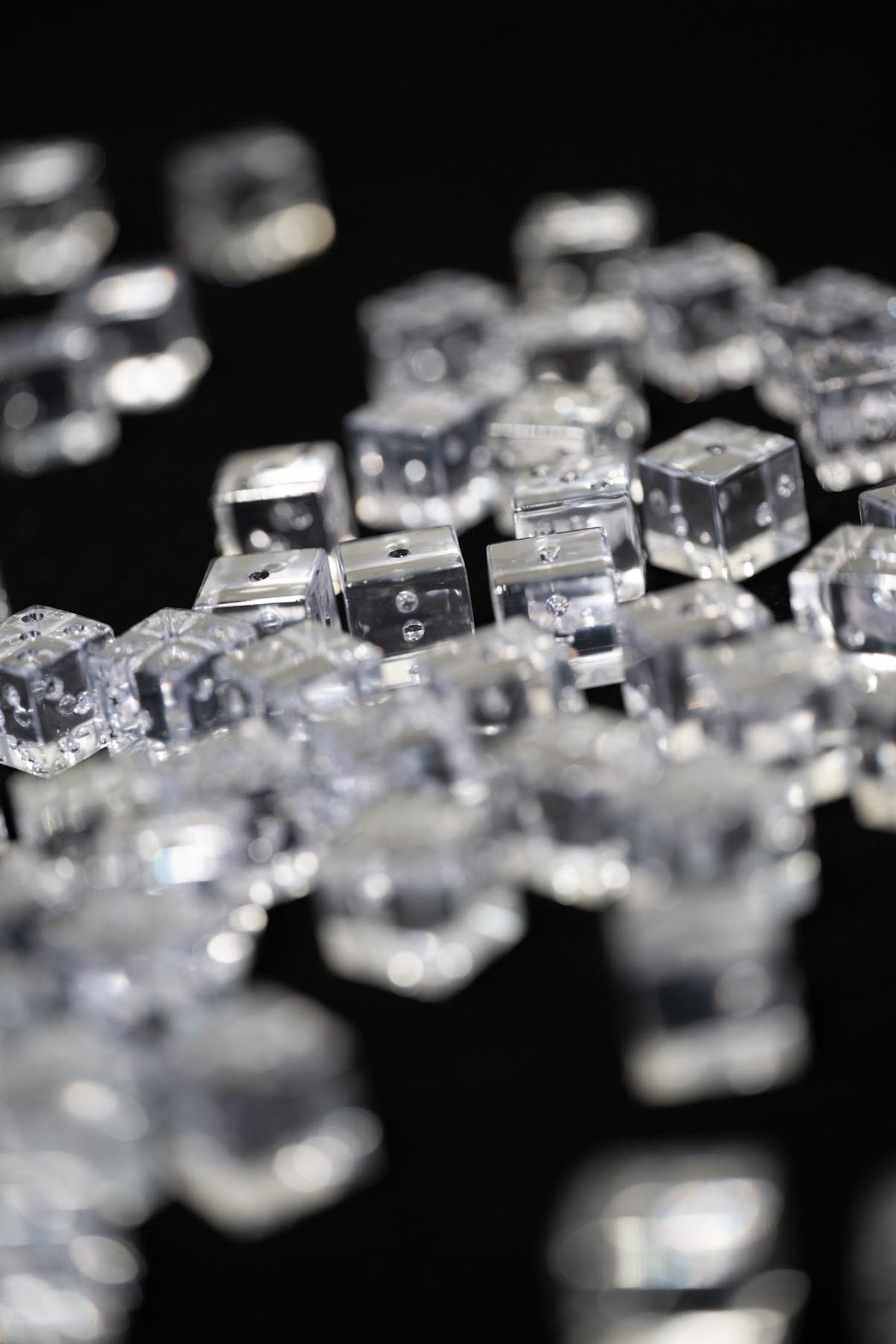
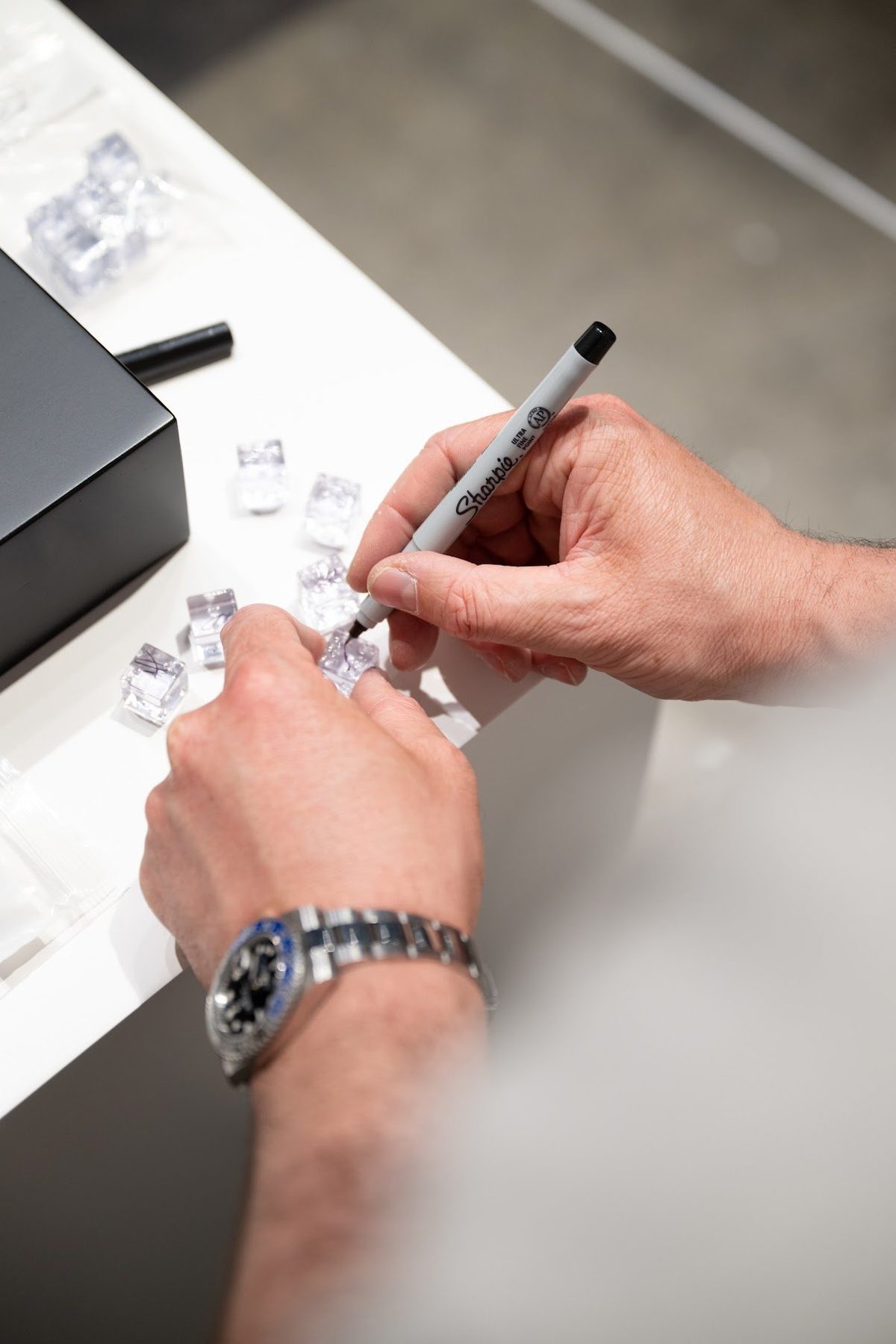
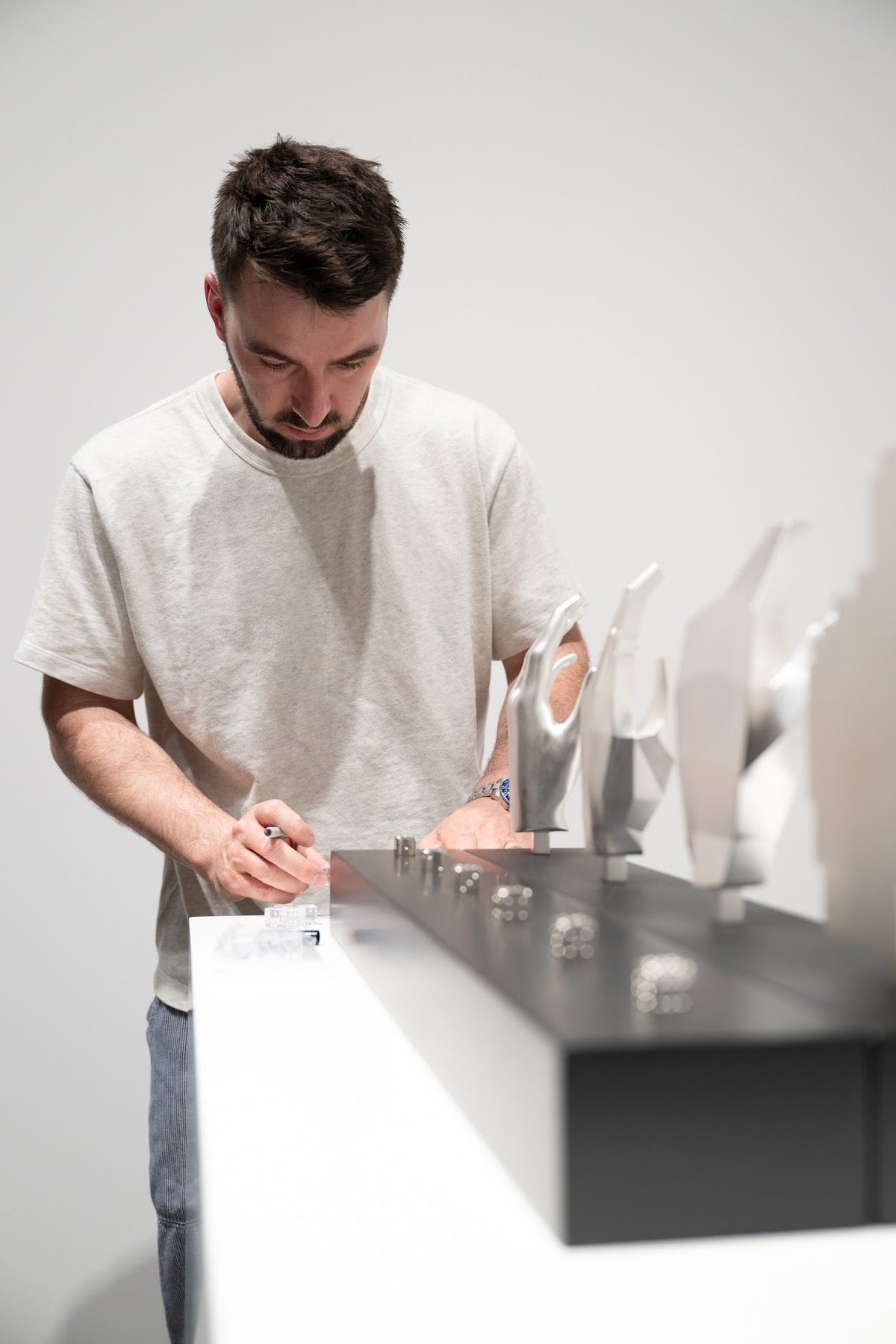
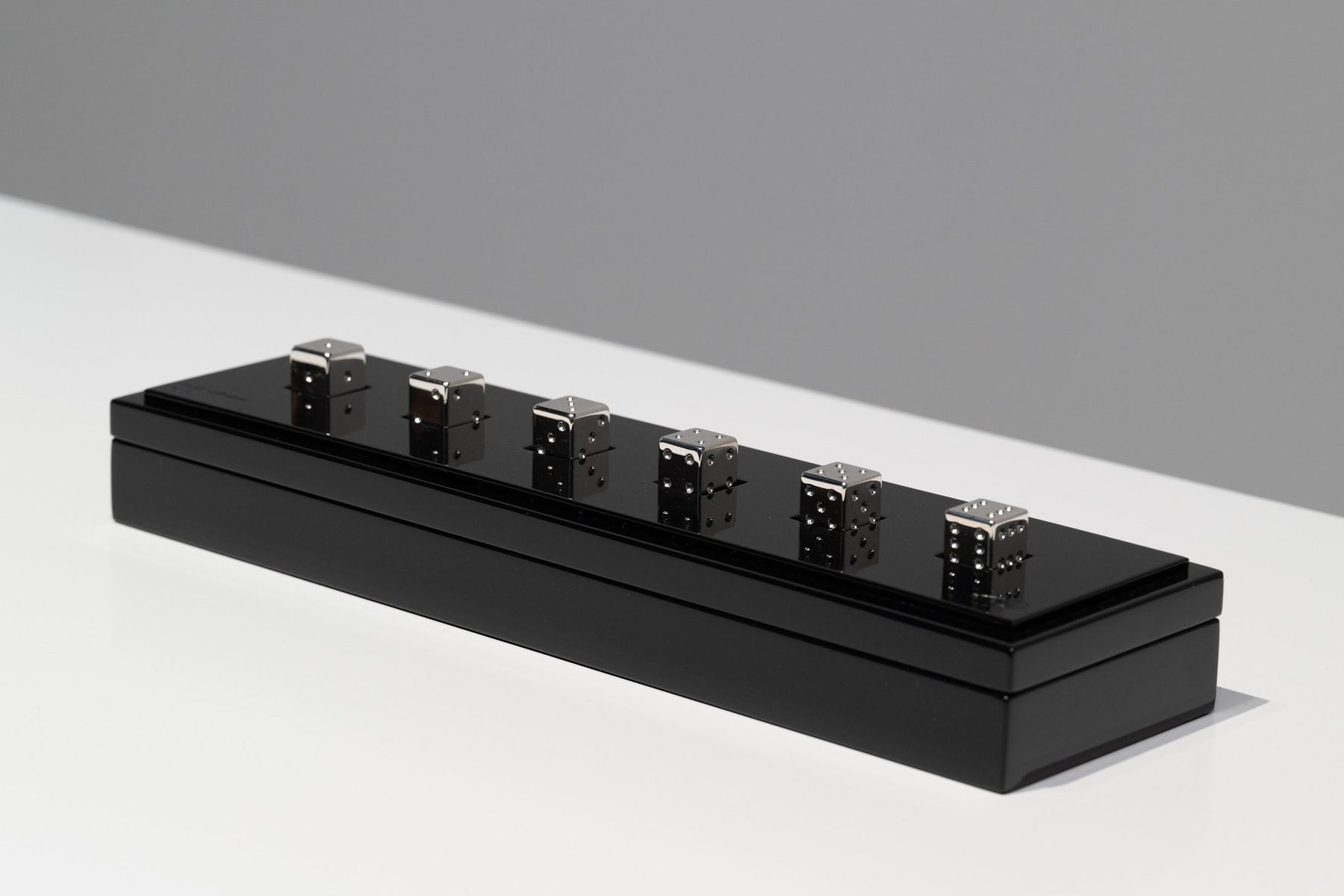
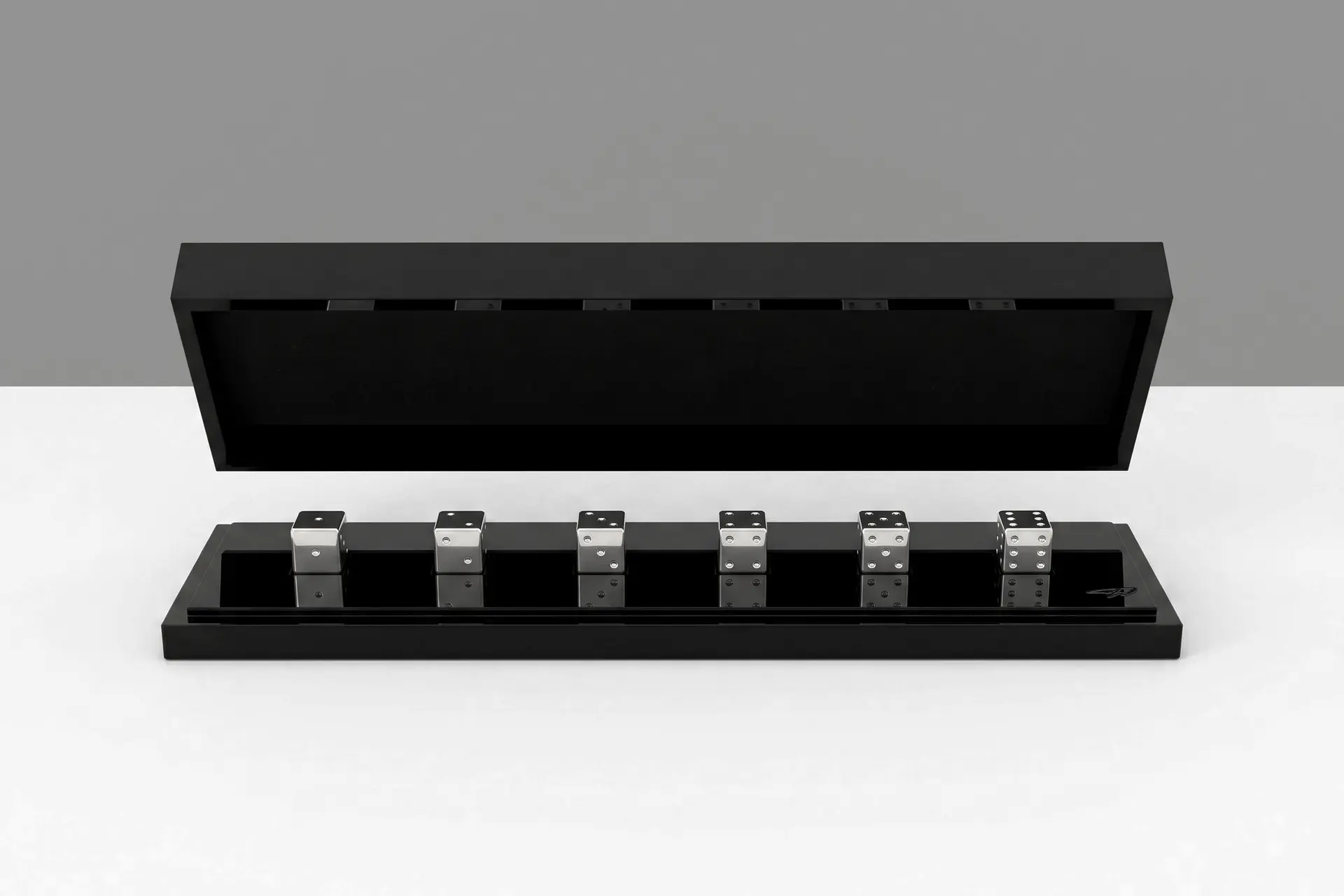
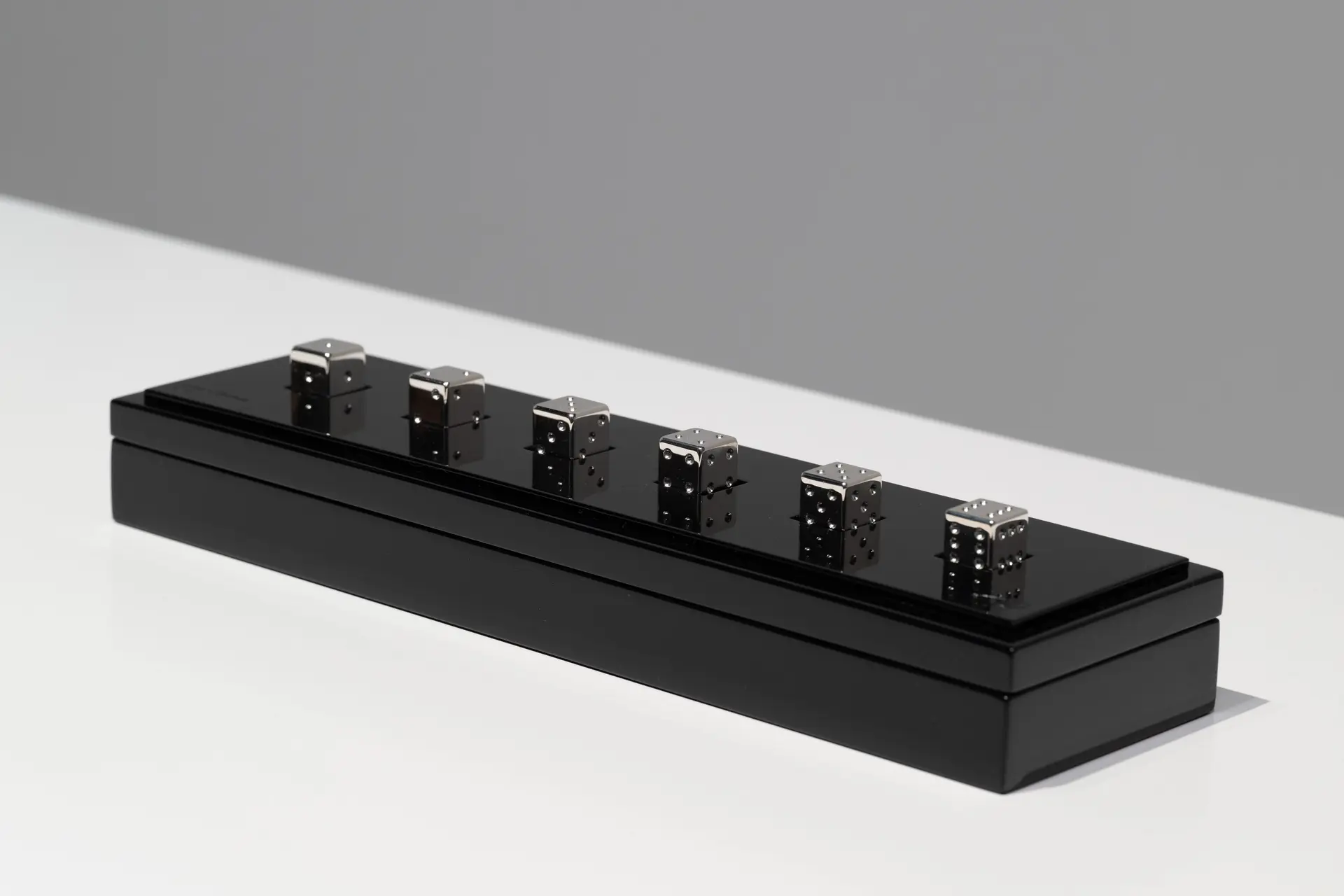
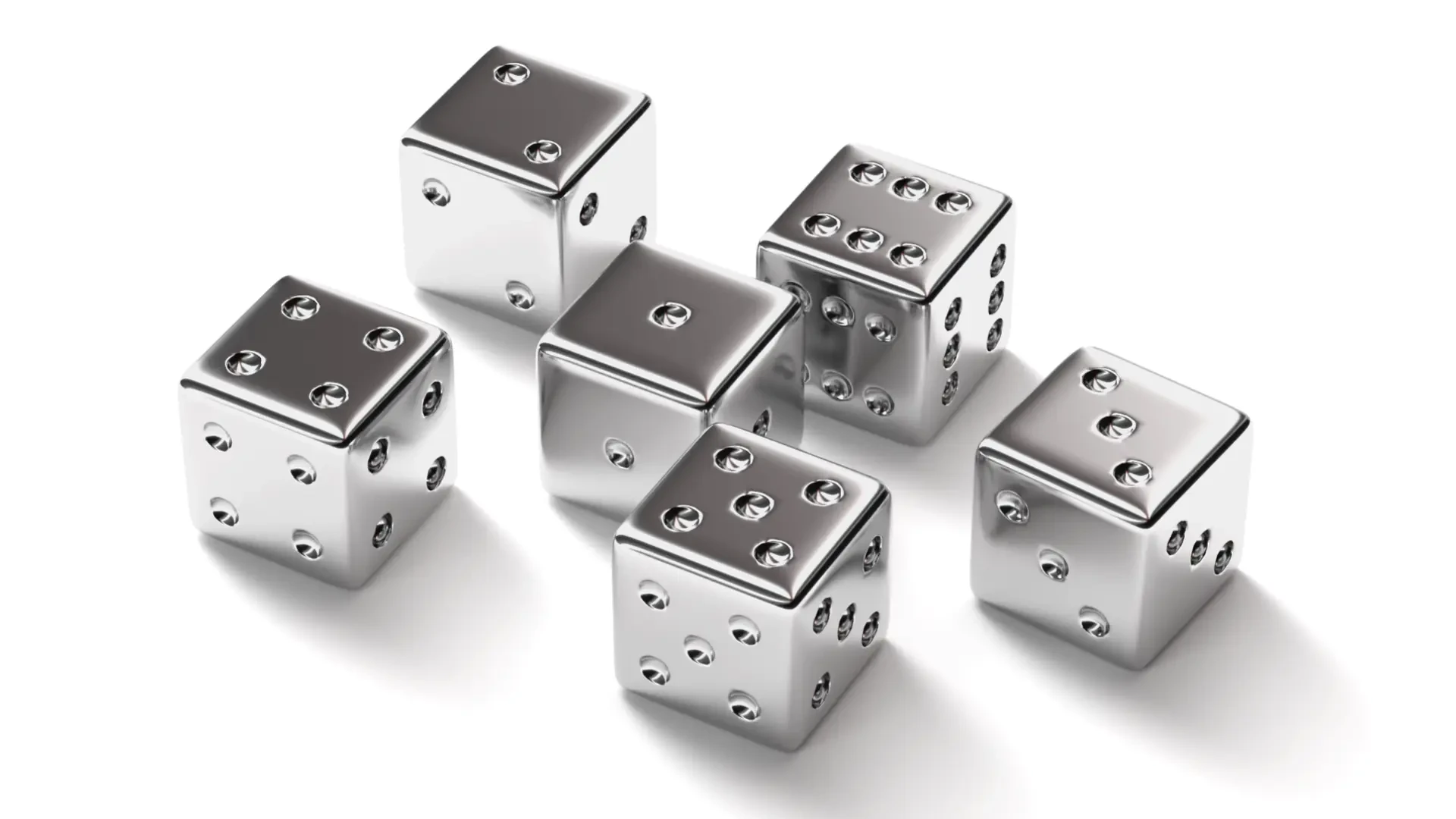
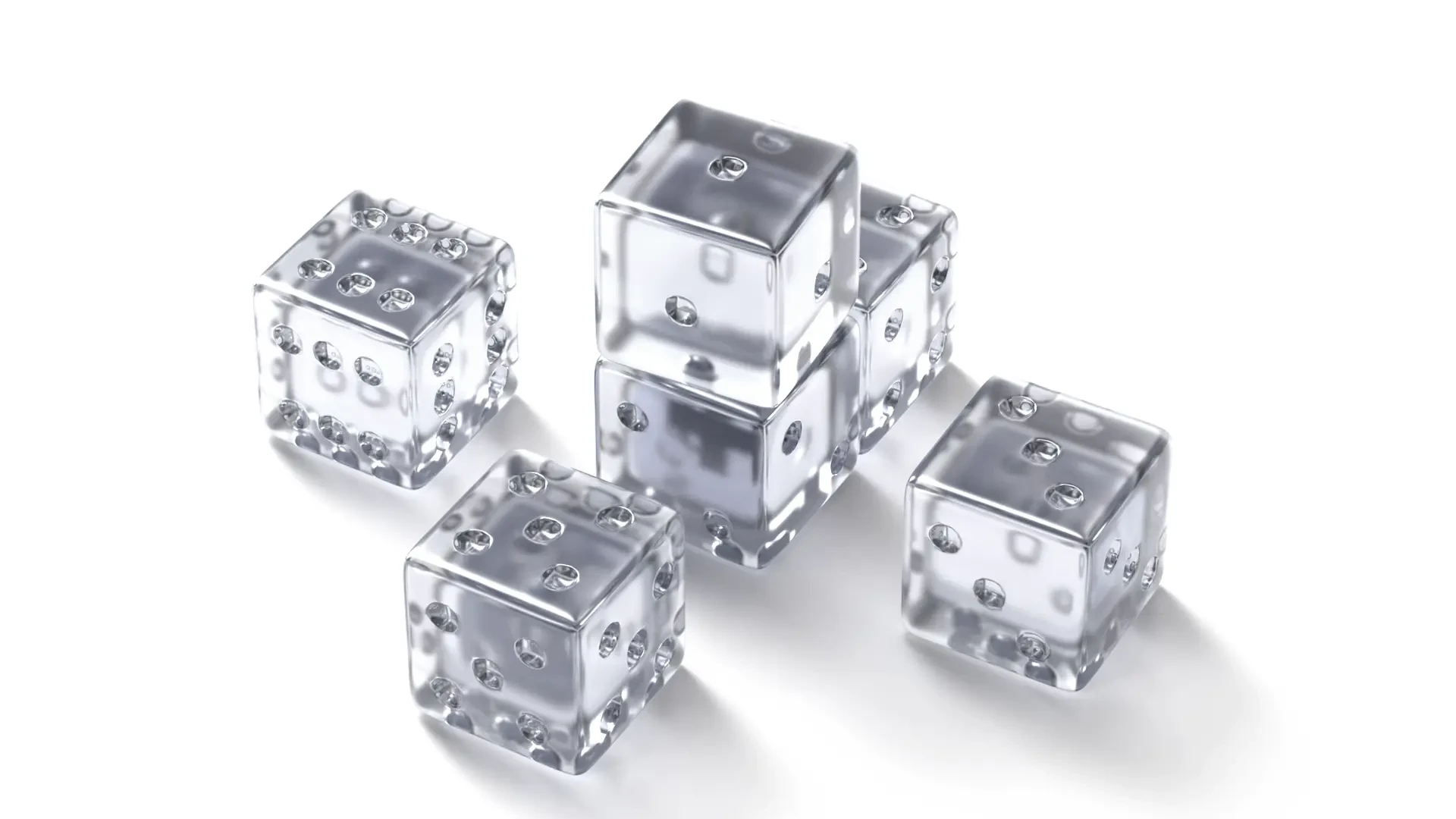
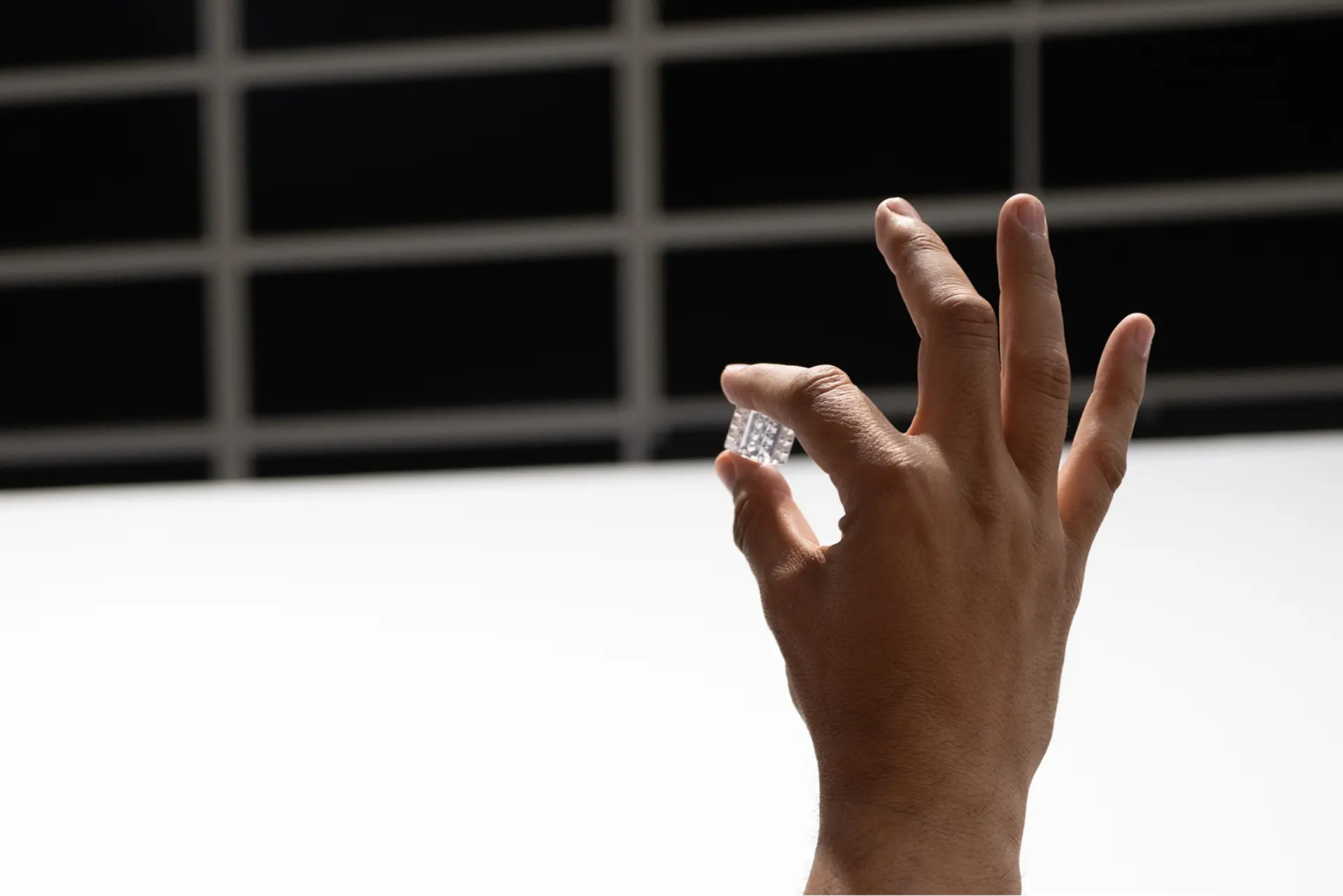
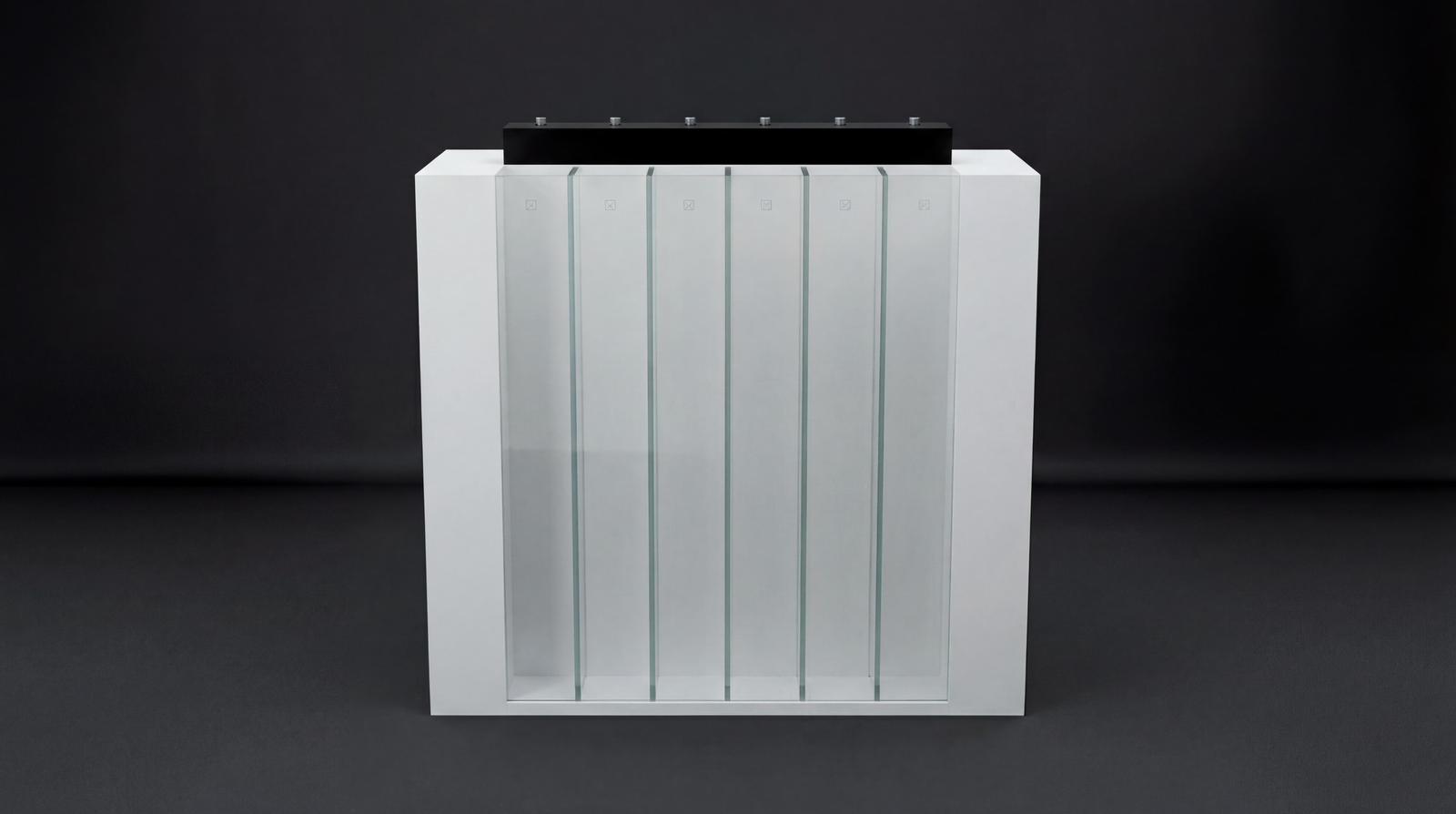
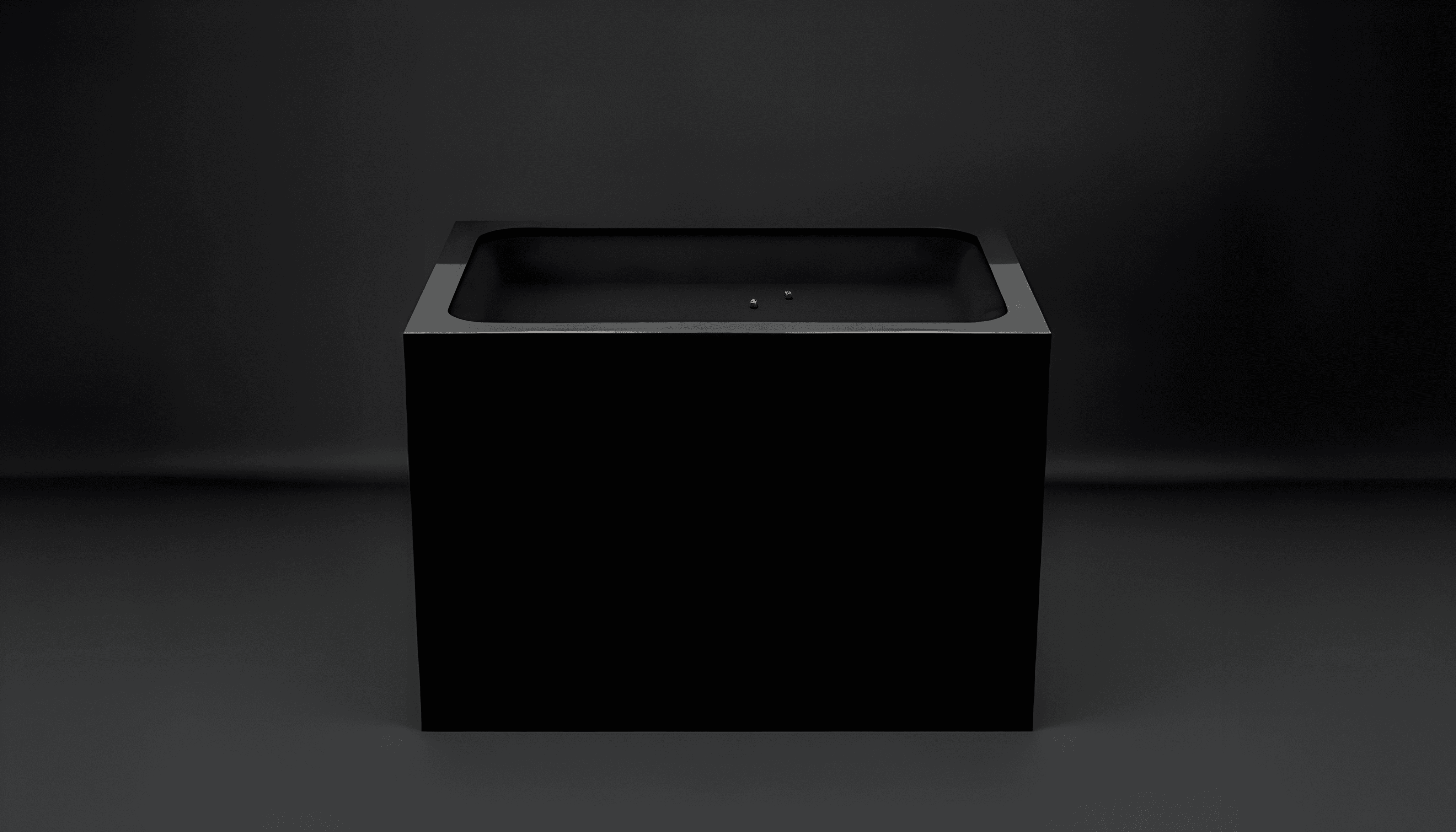
Work is the row of silver hands that turn into a cursor. Luck is six resin dice, each with the same number on every face, so rolling one can only give one result. In Play, visitors rolled six ordinary dice to receive a resin set of Luck, then traded with strangers to complete a set of one to six and came back for a signed set. Each roll also added a set to a growing display under the "Luckiest" 1/1. Asprey Studio made silver sets of Luck, priced at $8,888 and set to move to a market price of 1,111 rolls. A related project with Starbucks put numbered coasters into the same exchange.
Duchamp made 3 Standard Stoppages in 1913 by dropping threads and fixing the curves they made, and in 1924 he issued the Monte Carlo Bond to fund a system for beating roulette. Fluxus artists in the 1960s made boxed games whose rules were the work. Luck reverses Duchamp. The chance is gone before the throw, and the trading floor around it becomes the actual game.
If every die is fixed, what were people trading for?
Two sequences of objects
Work's four hands were realized in silver with Asprey Studio in 2024. Luck uses six dice, each carrying a single number on every face. Rolling one cannot change its outcome. The objects separate the appearance of chance from its operation.3,2
The fair's rules
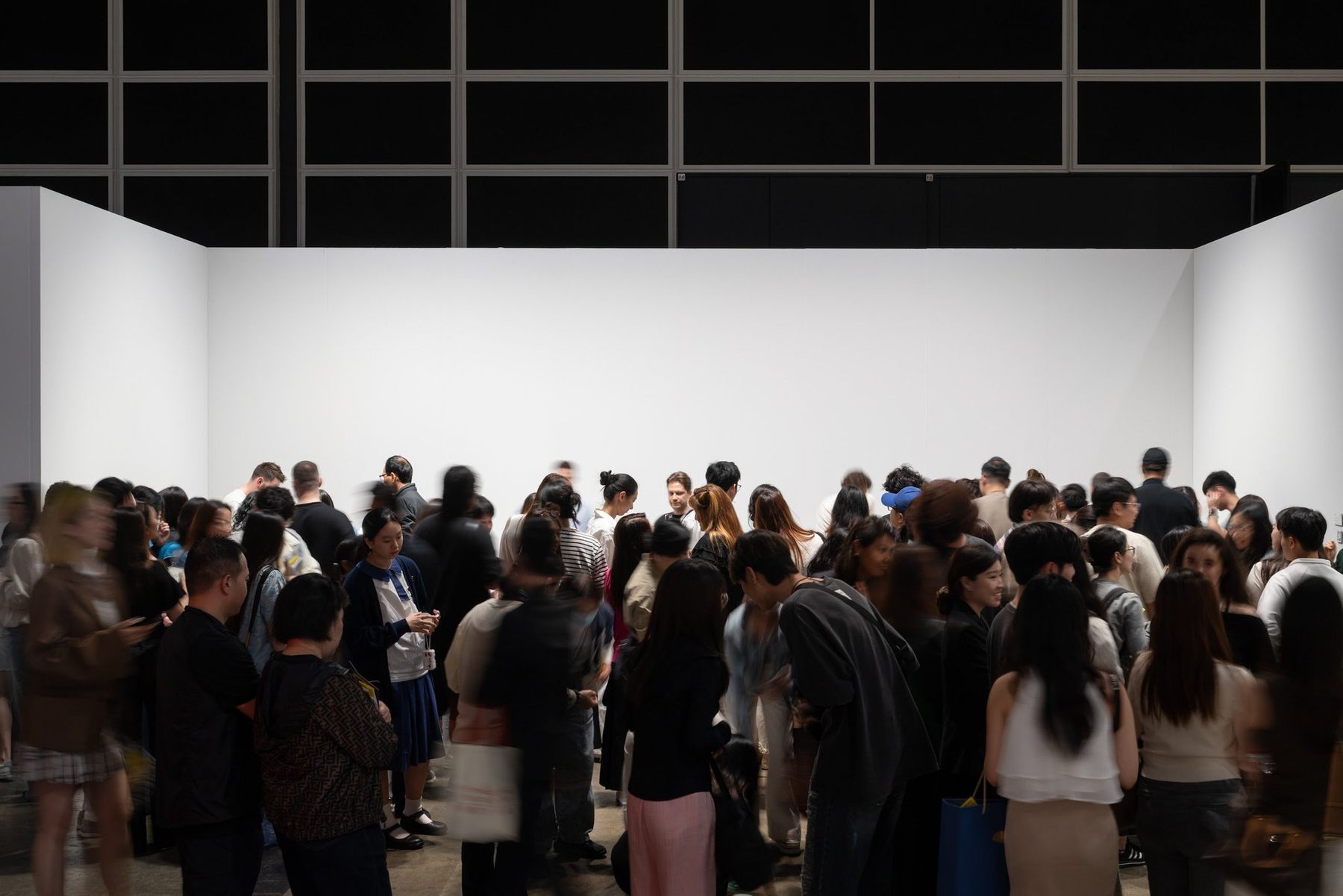
According to the studio instructions, a roll of ordinary dice determined the six resin dice a participant received. Participants could trade to assemble the numbers one through six, then return for a signed set. Keeping an incomplete combination was also possible.
Luckiest was conceived as an accumulating physical record of rolls. The associated Art of Conversation project with Starbucks extended exchange to numbered coasters. These are distinct components, not interchangeable names for the silver sculpture.1
Online participation and production
Silk separately documents a digital rolling system on Ethereum and a token-burning route to claiming a silver die. Its account also identifies Hanoia's lacquer holder, Diana Jou's documentary and photography by Devin Oktar Yalkin.
The fair's exchanges and online rules create different forms of participation.2
Whose account is this?
Silk produced and presented the project and published its surrounding editorial programme. That record supports the exhibition and production history.2
Development
Art Basel Hong Kong, 2026
Images


Notes on the record
Sources and further reading
Artist statements describe intention. Reporting and interviews record different perspectives; exhibition announcements establish specific presentations. How sources are classified.
1. Artist / studio · Preserved primary-source excerpts
Work, Luck, Play: Preserved studio catalogue excerpts
Selected passages from the public catalogue before this editorial revision. These preserve the artist's account; their inclusion is not independent corroboration. The capture date is not the work's creation date.
2. Exhibition record · Exhibitor project record
Jack Butcher: Work, Luck, Play
Documents the Hong Kong presentation, 25-29 March 2026, and production credits. Silk describes its own involvement in production, collecting and the surrounding editorial programme.
3. Gallery / platform · Production-partner documentation
Asprey Studio × Jack Butcher
Documents the silver Work sculpture and its assay marks. Asprey is the fabricator and a project partner, not an independent critic.