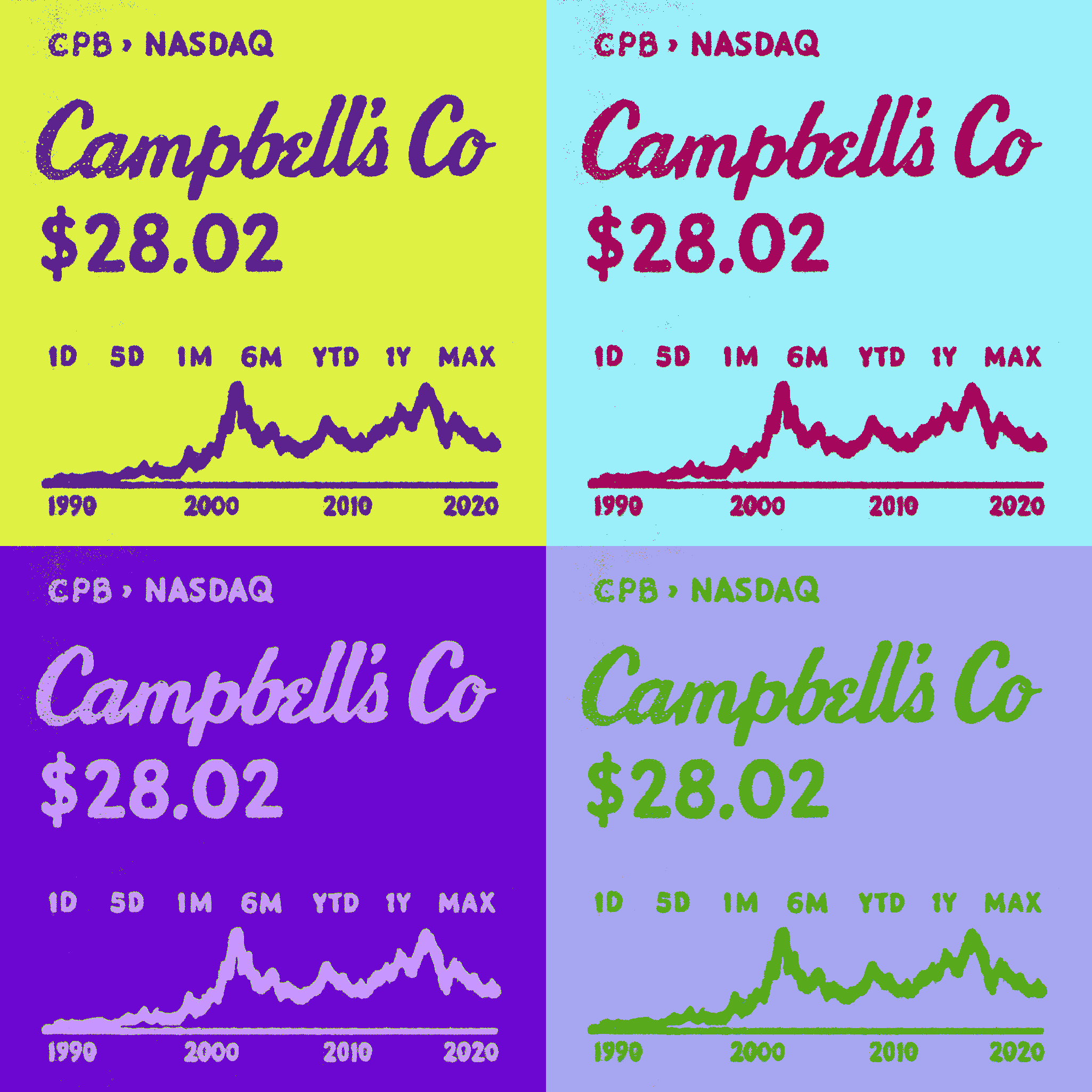
Stock is a generative edition of 150 works made in 2025. Its subject is Campbell's.
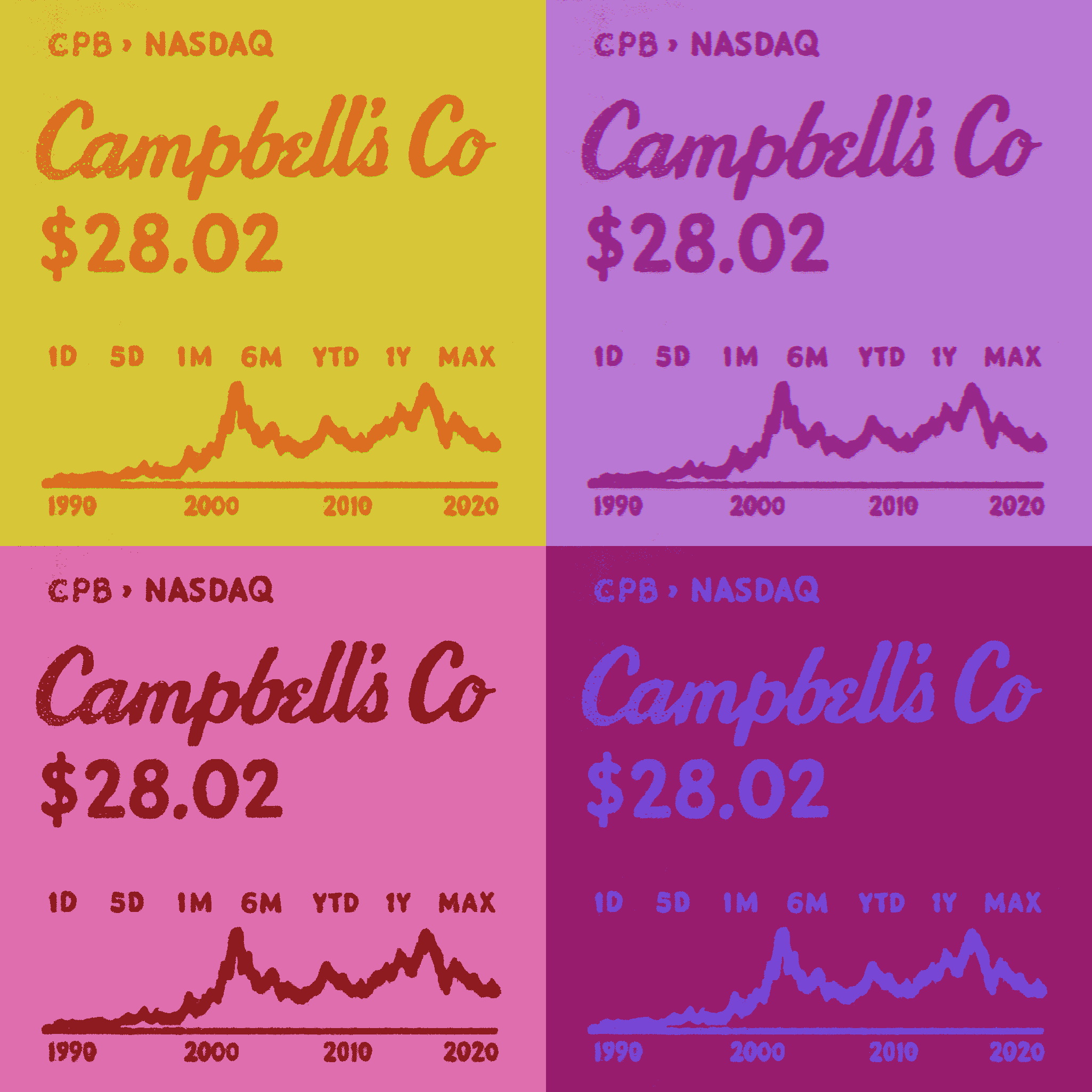
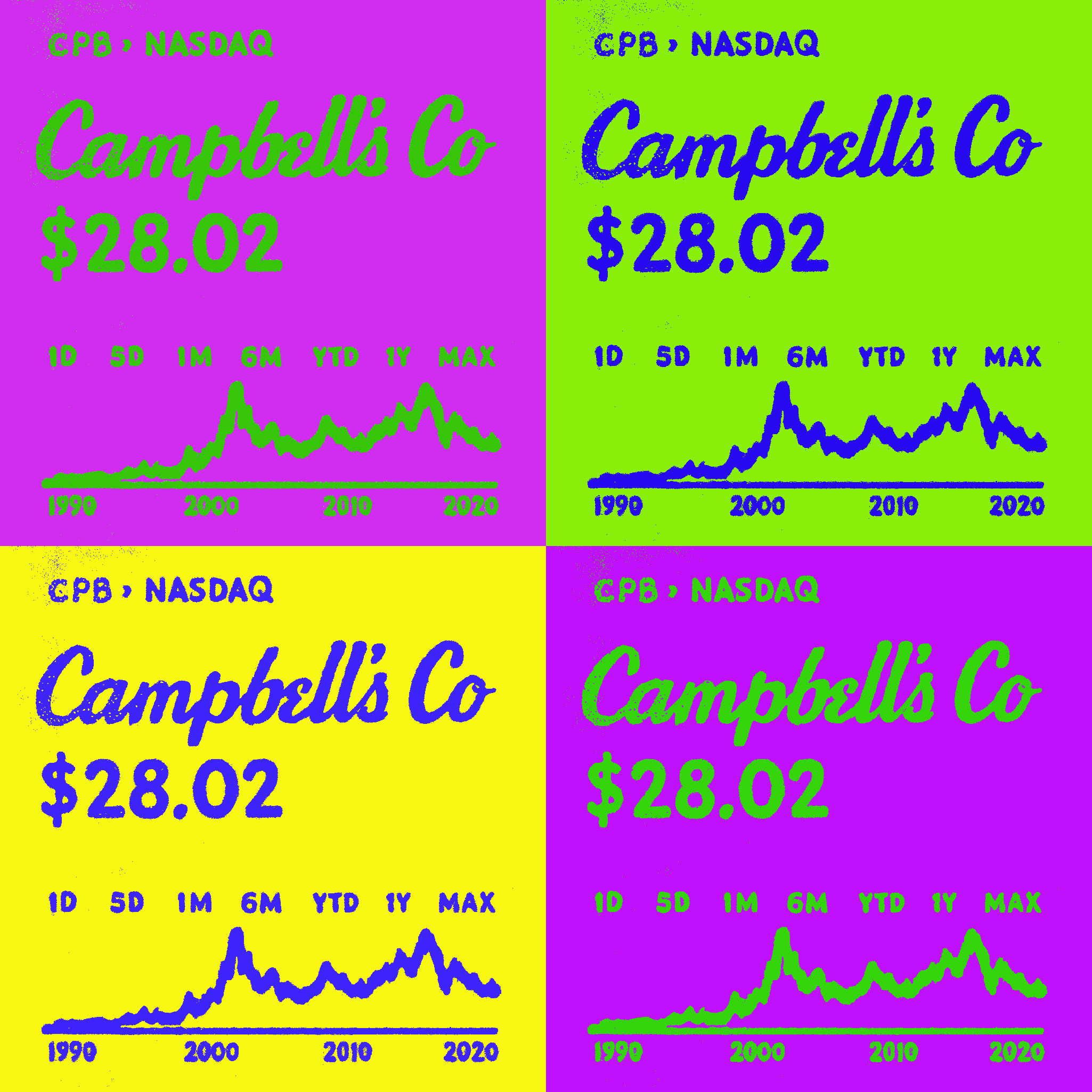
The can has become a ticker. Where the familiar red and white label once stood for a product you could hold, Stock shows the company as a price, the quote of $28.02 fixed in the image.
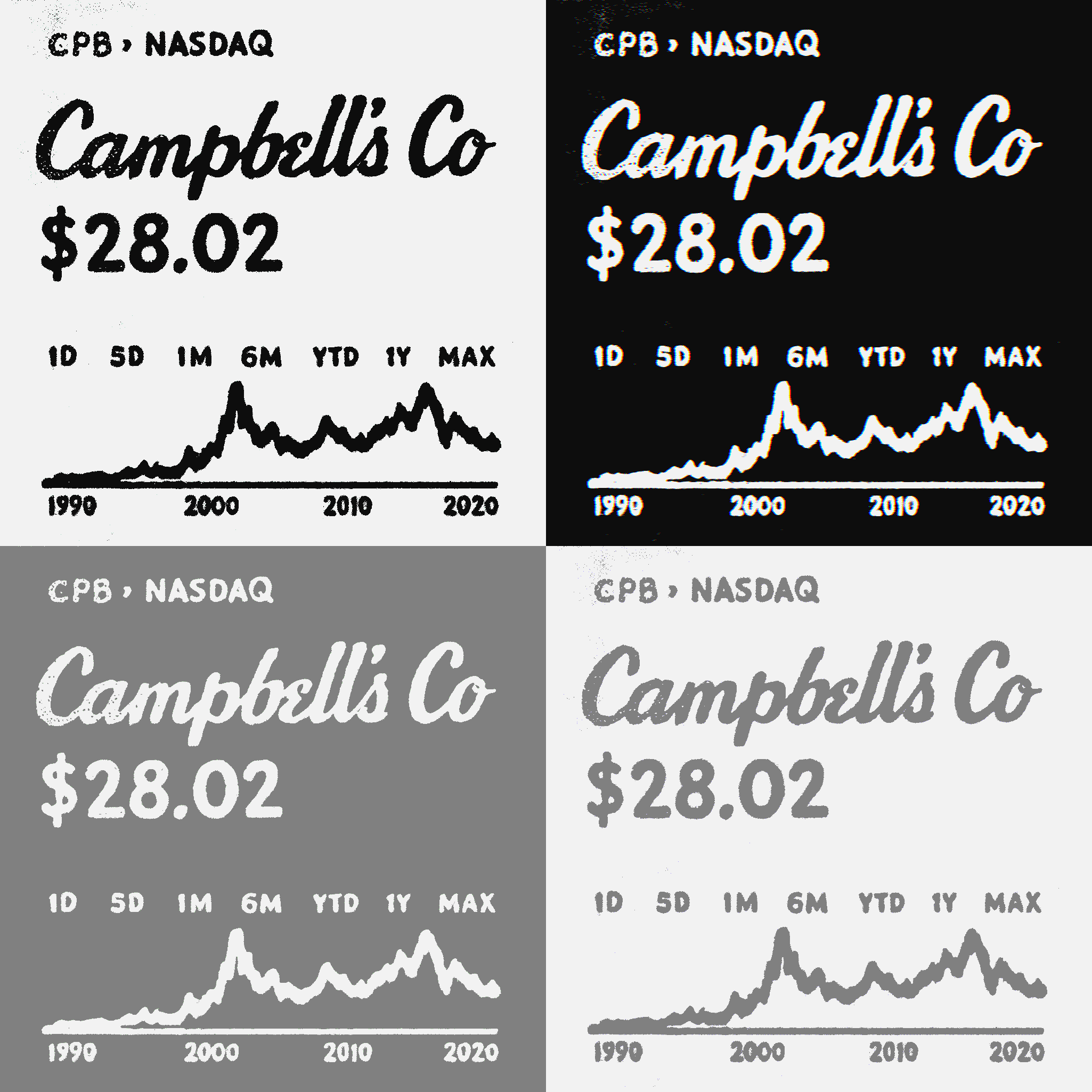
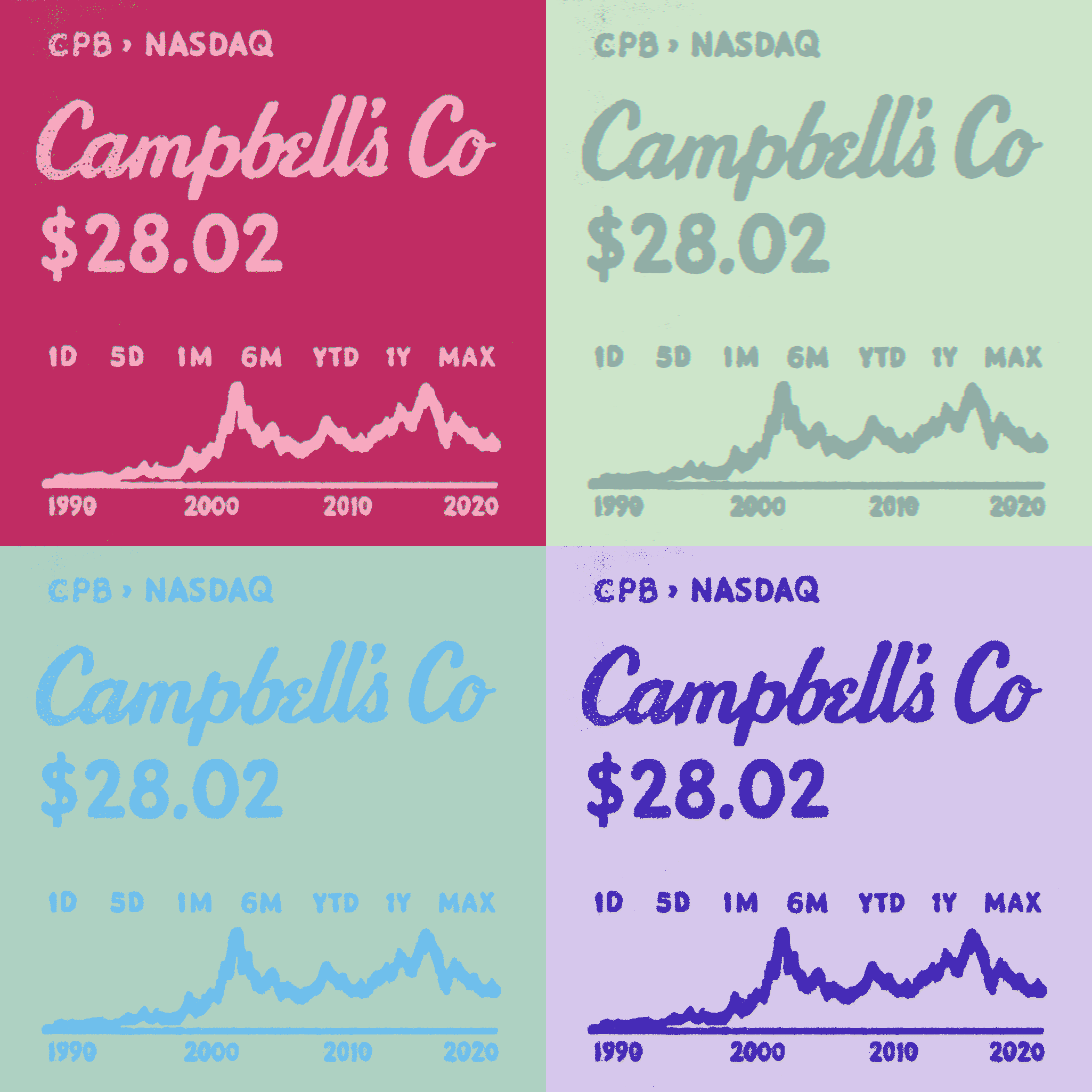
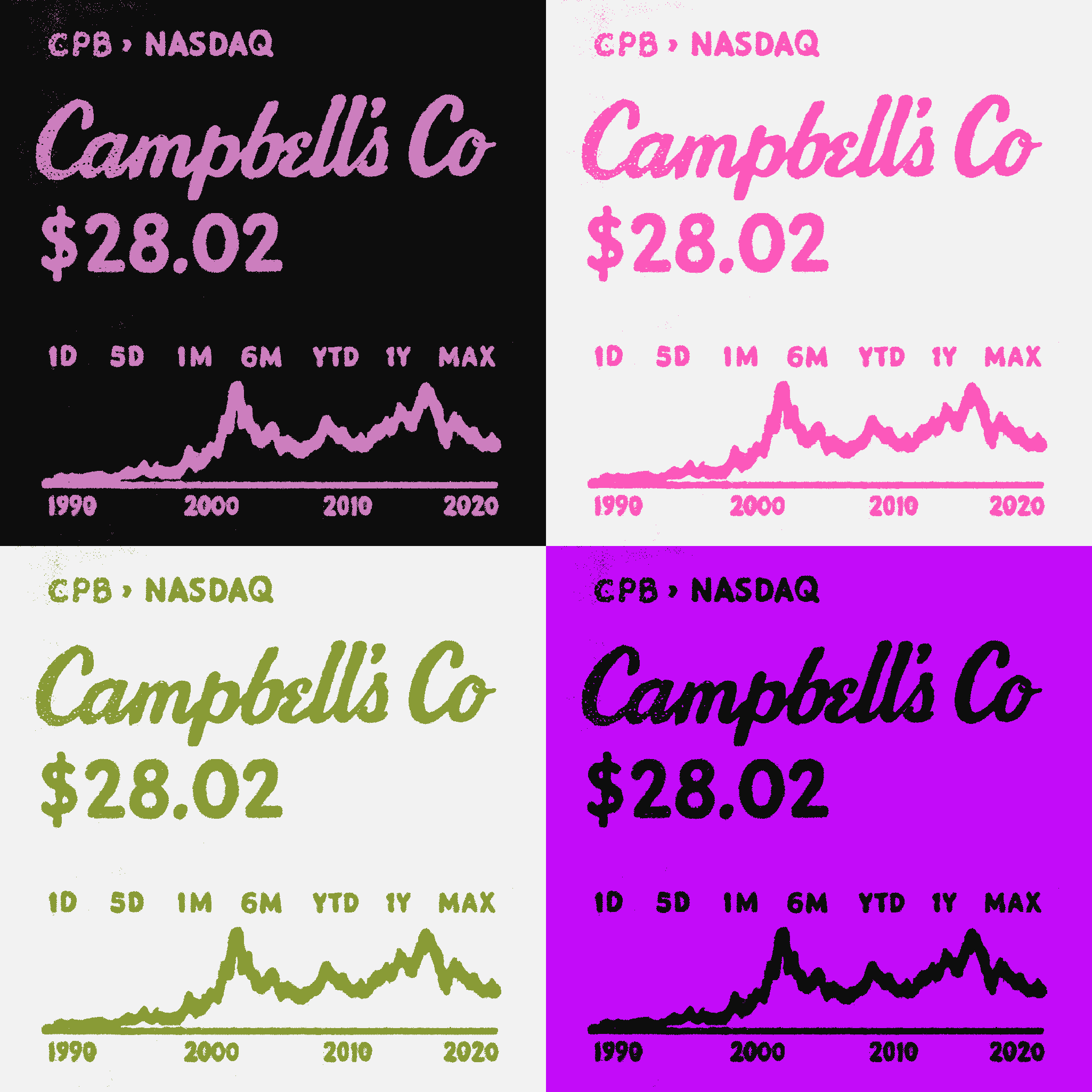
Every work carries a market chart where you would expect the package. The studio catalogues six visual systems, and the retained images show Halftone, Interlaced, Noise, Gradient and Outlined versions. They are the same subject seen through different printing and screen effects.
The comparison is explicit. In 1962 Andy Warhol showed 32 hand-painted canvases of Campbell's Soup Cans, one for each flavor, and made a supermarket product into a painting subject. Stock returns to the brand sixty years later and finds that people now meet it mostly as a financial symbol. Warhol's repetition was about mass production. Stock's variations are about how many ways a market can be rendered.
Owning an edition gives you no share in the company. So what kind of claim is it?
From product to financial symbol
The artist explicitly compares the work with Andy Warhol's Campbell's Soup Cans. The 1962 work comprises 32 hand-painted canvases, as MoMA's record explains. Describing it as screenprinted would confuse it with a technique Warhol adopted later.
Stock's comparison concerns the same brand encountered in a different form. It does not establish equivalence in meaning, influence or historical standing.2
Variation within a fixed subject
The studio catalogues six systems. The retained image labels identify Halftone, Interlaced, Noise, Gradient and Outlined variants alongside the hero image.
The chart should be read as part of the artwork, not as market data.1
What changes when the can becomes a chart?
The image shifts the viewer's attention from a product to a claim on a company. Repetition and visual treatment make that shift available for comparison. Collecting an edition does not confer control over the company represented.
Development
The studio dates Stock to 2025. Source
Images
Notes on the record
Sources and further reading
Artist statements describe intention. Reporting and interviews record different perspectives; exhibition announcements establish specific presentations. How sources are classified.
1. Artist / studio · Preserved primary-source excerpts
Stock: Preserved studio catalogue excerpts
Selected passages from the public catalogue before this editorial revision. These preserve the artist's account; their inclusion is not independent corroboration. The capture date is not the work's creation date.
2. Historical reference · Museum collection record
Andy Warhol: Campbell's Soup Cans (1962)
Identifies the 32 canvases as hand-painted. Supports the historical distinction made on the Stock page, rather than evidence of recognition of Butcher by MoMA.