Notes /
Checks
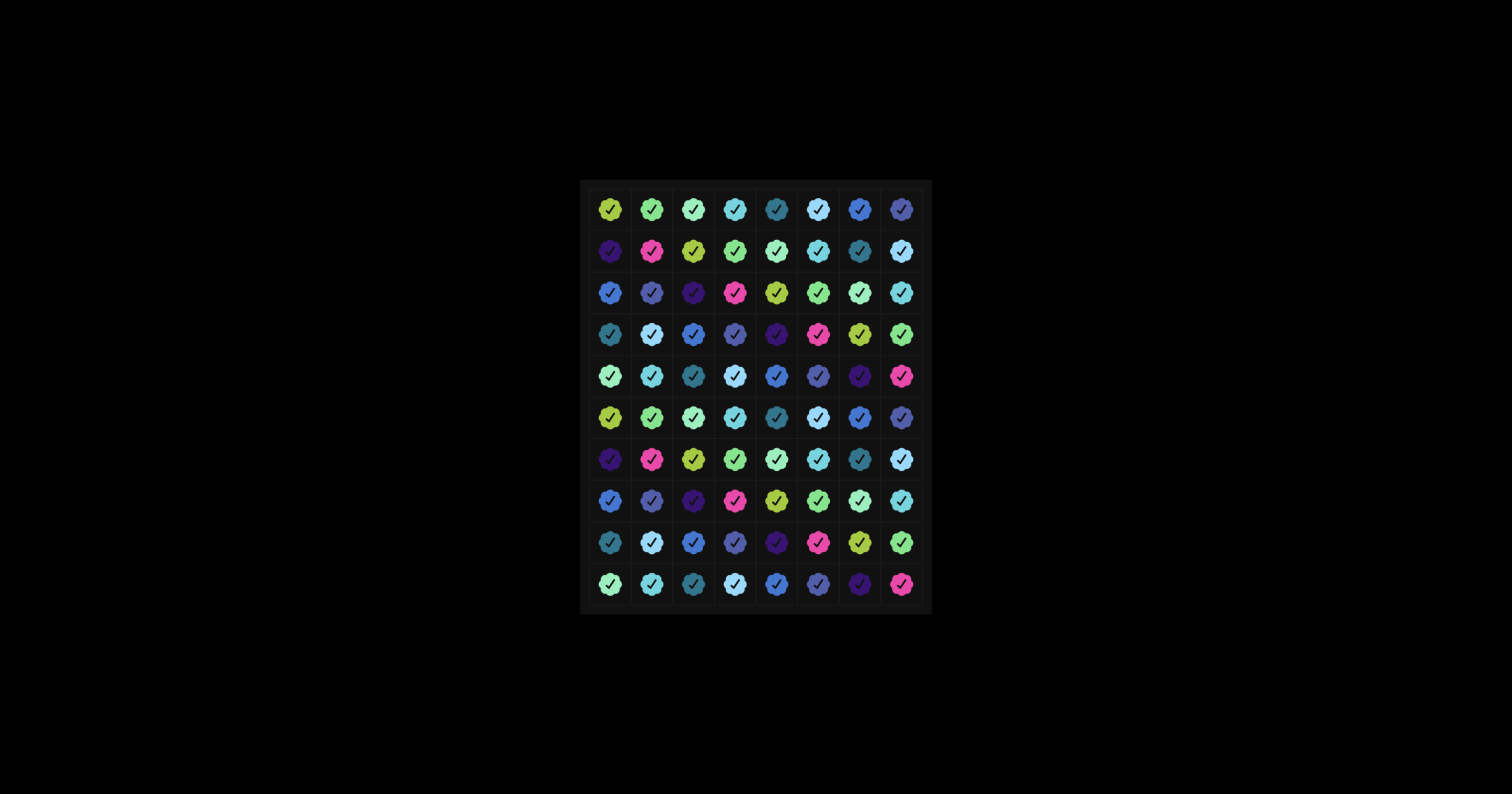
Checks opened on 3 January 2023 as a 24-hour open edition at $8. 16,031 editions were minted, all the same image: a grid of 80 colored checkmarks.
The price was the point. Twitter had just started selling its blue verification badge for $8 a month, so a mark that once meant someone had vouched for you could be bought. Checks asks who gets to grant approval, and what it is worth once anyone can have it.
From February 2023 a collector could burn an edition for an Original and then merge two Originals into one. The grid thins to 40 checks, then 20, 10, 5, 4 and 1. Colors shift with each merge. 64 single checks can become one Black Check. Each merge destroys one work so another can grow rarer, and nobody has to merge. The image you look at is whatever the collectors left behind.
The only statement on the work is "This artwork may or may not be notable."
Olav Velthuis, in "Duchamp's Financial Documents: Exchange as a Source of Value", writes about four financial readymades. The Tzanck Check came first, in 1919. Duchamp drew it by hand on "The Teeth's Loan and Trust Company, Consolidated, 2 Wall Street" for $115, to pay a Parisian dentist, Daniel Tzanck. He had a stamp made for the background that repeats the bank's name over and over. The Monte Carlo Bond followed five years later, issued to raise money for a gambling project. Duchamp later said he made the bonds "to make capital to break the Monte Carlo bank".
Velthuis says that his other readymades questioned the value of artistic craftsmanship in a capitalist society, but the Tzanck Check went the opposite direction, "importing this value in the world of finance". It is a drawing, and it was also a payment.
Checks starts from the price. The rules were worked out in public over 7 to 10 January 2023, and one rejected plan could have left some collectors with nothing after burning.
Work: Checks