
Checks opened on 3 January 2023 as a 24-hour open edition priced at $8, and 16,031 editions were minted.
The price was the point. Twitter had just started selling its blue verification badge for $8 a month, and a mark that once meant someone had vouched for you could now be bought. Checks asks who gets to grant approval, and what it is worth once anyone can have it.
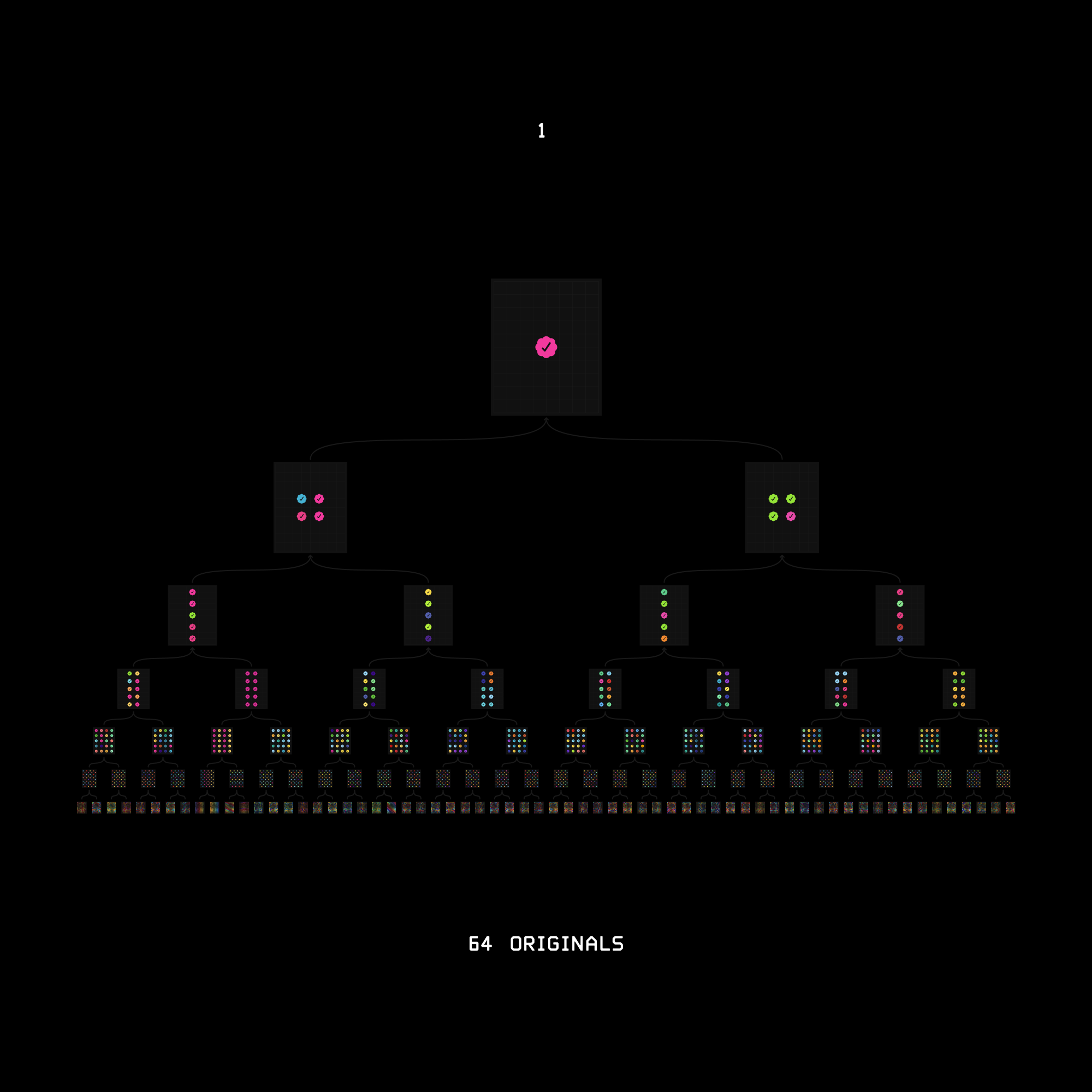
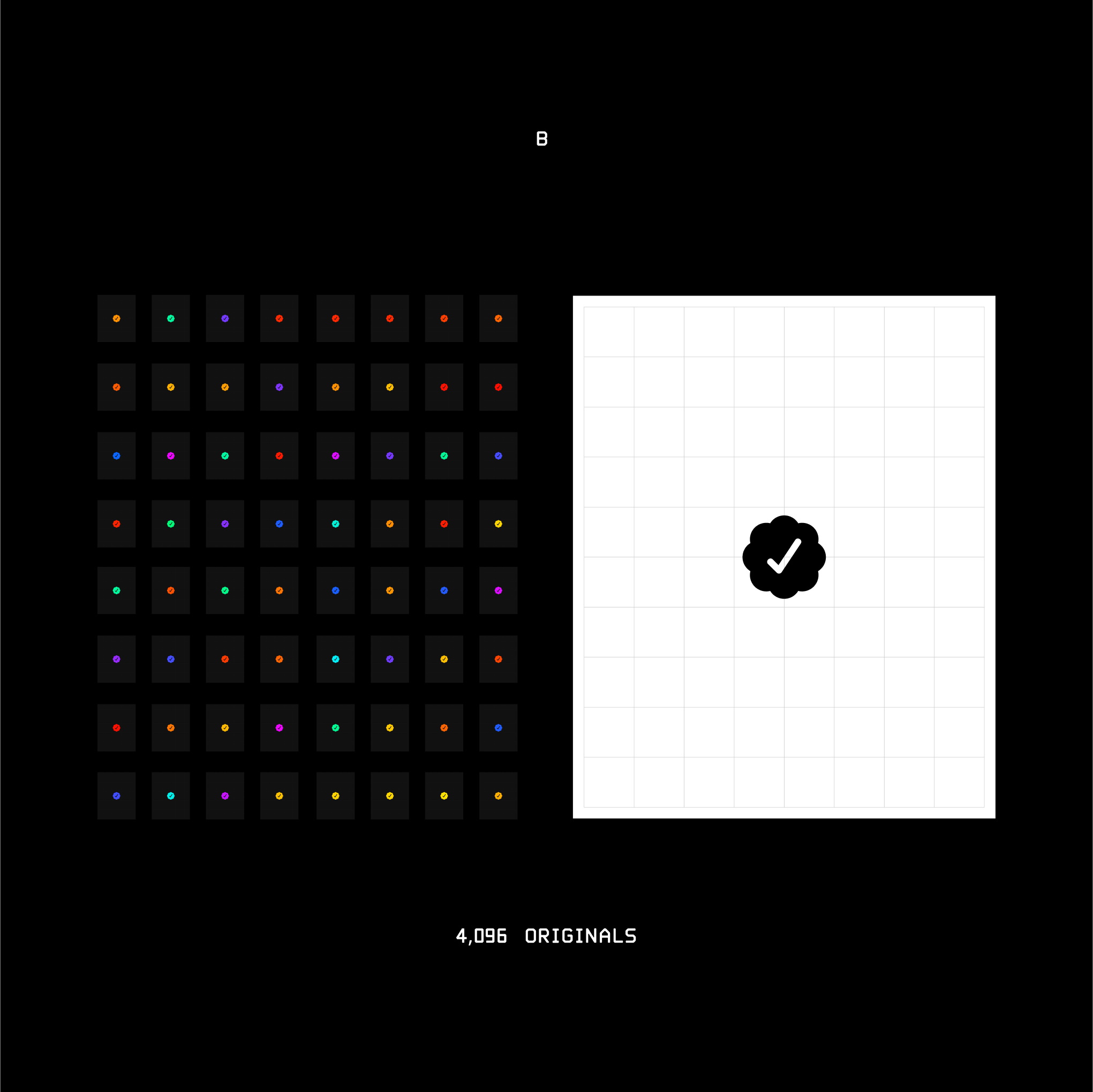
What you see is a grid of 80 colored checkmarks, the same image in every edition at first. From February 2023 collectors could burn an edition for an Original and then merge two Originals into one. The grid thins to 40 checks, then 20, 10, 5, 4 and 1, colors shifting with each merge, until 64 single checks can become one Black Check. The image you look at is whatever the collectors left behind.
In 1919 Marcel Duchamp paid his dentist with a cheque he drew by hand, the Tzanck Check, and the drawing ended up worth more than the sum written on it. Checks takes up the same question about who backs a sign of value. It also belongs with the institutional critique of the 1970s, which turned the systems that confer artistic legitimacy into the subject of the work. Here the institution is a social network, and the ritual of approval is a few pixels.
Each merge destroys one work so another can grow rarer. Who decided that was worth doing, and who is still holding out?
From a badge to a question
The launch followed Twitter's introduction of paid verification. A badge associated with recognition could now be bought. In his project statement, Butcher treats that change as a way to examine who establishes authenticity and whose judgment counts. The $8 edition price echoed the subscription price.
The internet is the subject here: its signs of credibility, its status hierarchies and the ease with which an image acquires a new meaning. The project's statement, "This artwork may or may not be notable," leaves that judgment open.3,6
The rules were developed in public
The 7-10 January 2023 posts show a work still being decided. Butcher describes a rejected plan that could leave some collectors with nothing after burning, explains that the original count of 80 was not a predetermined mathematical scheme, and shares a provisional compositing sequence.
The public record separates the first image from its later rationale and rules. It also names Jalil and Traf as collaborators during development. An abandoned proposal is part of the process record, not a rule to apply to the finished work.1
How the work changes
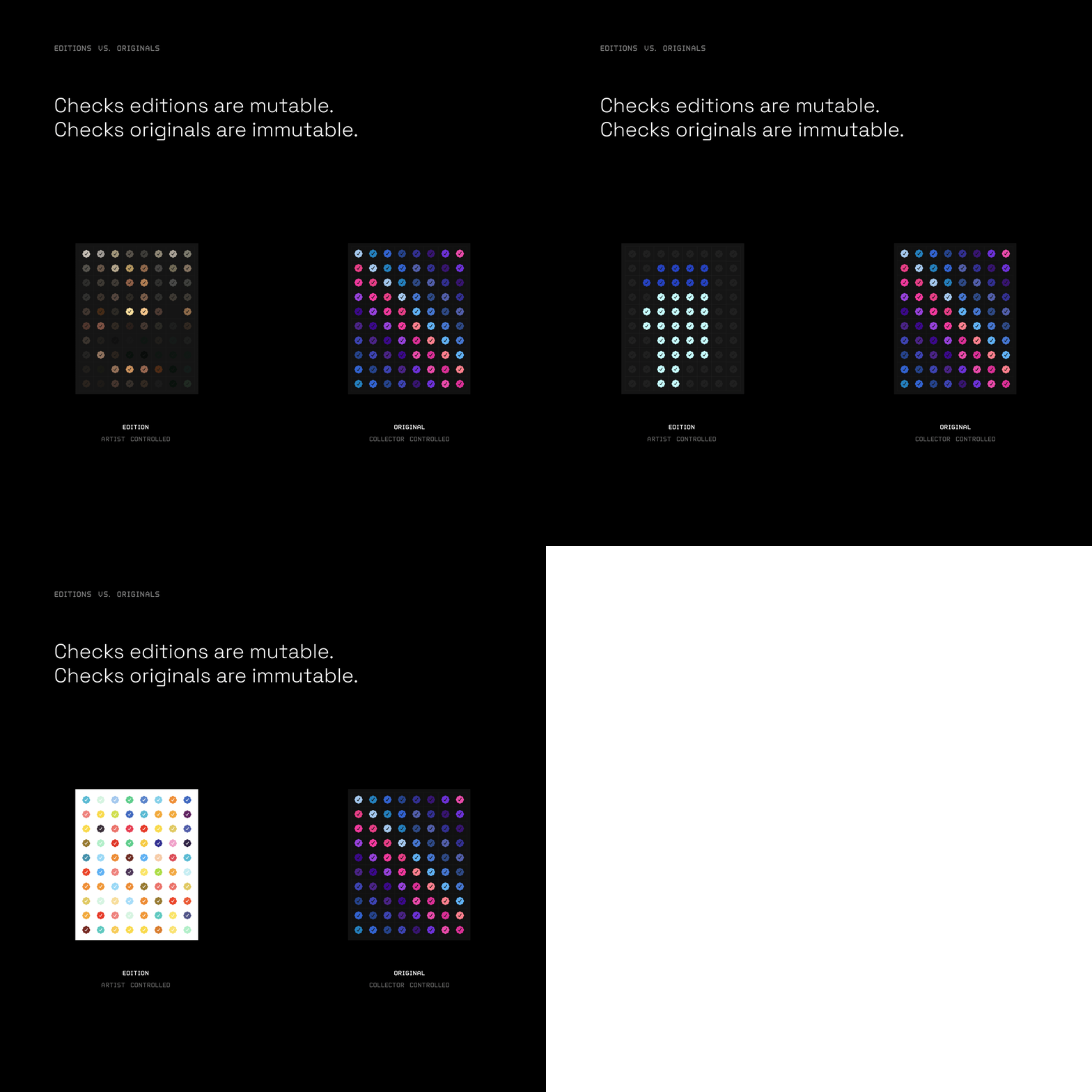
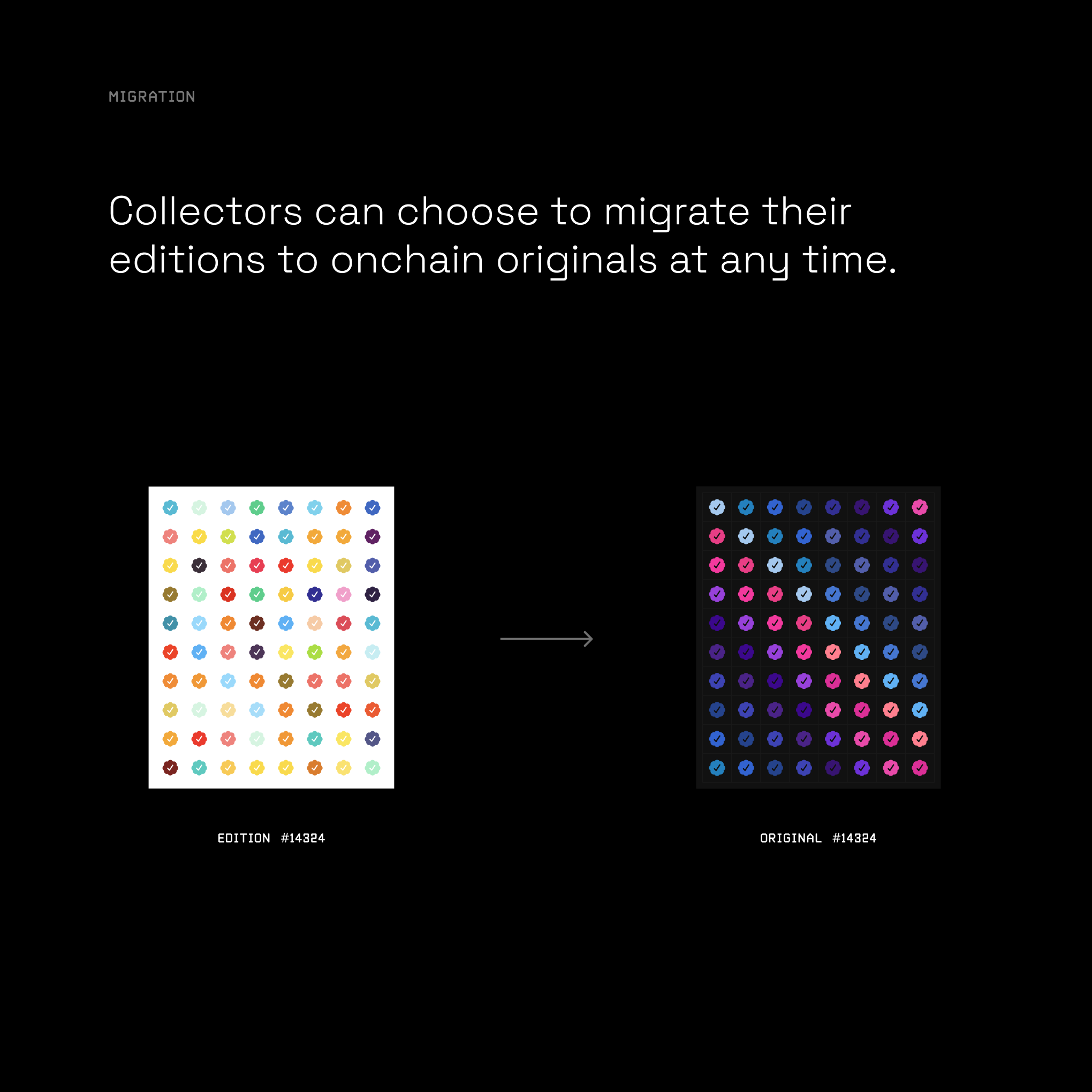
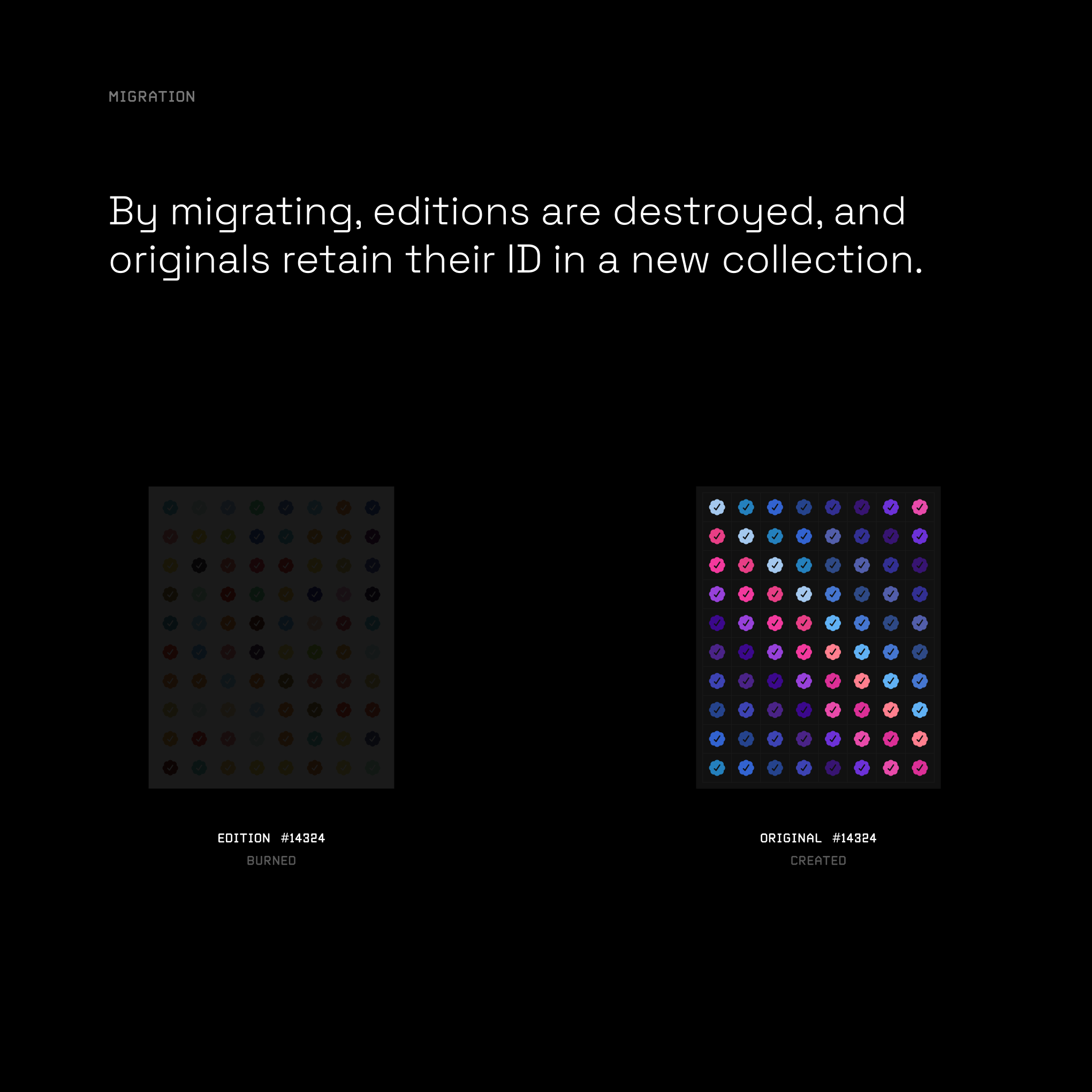
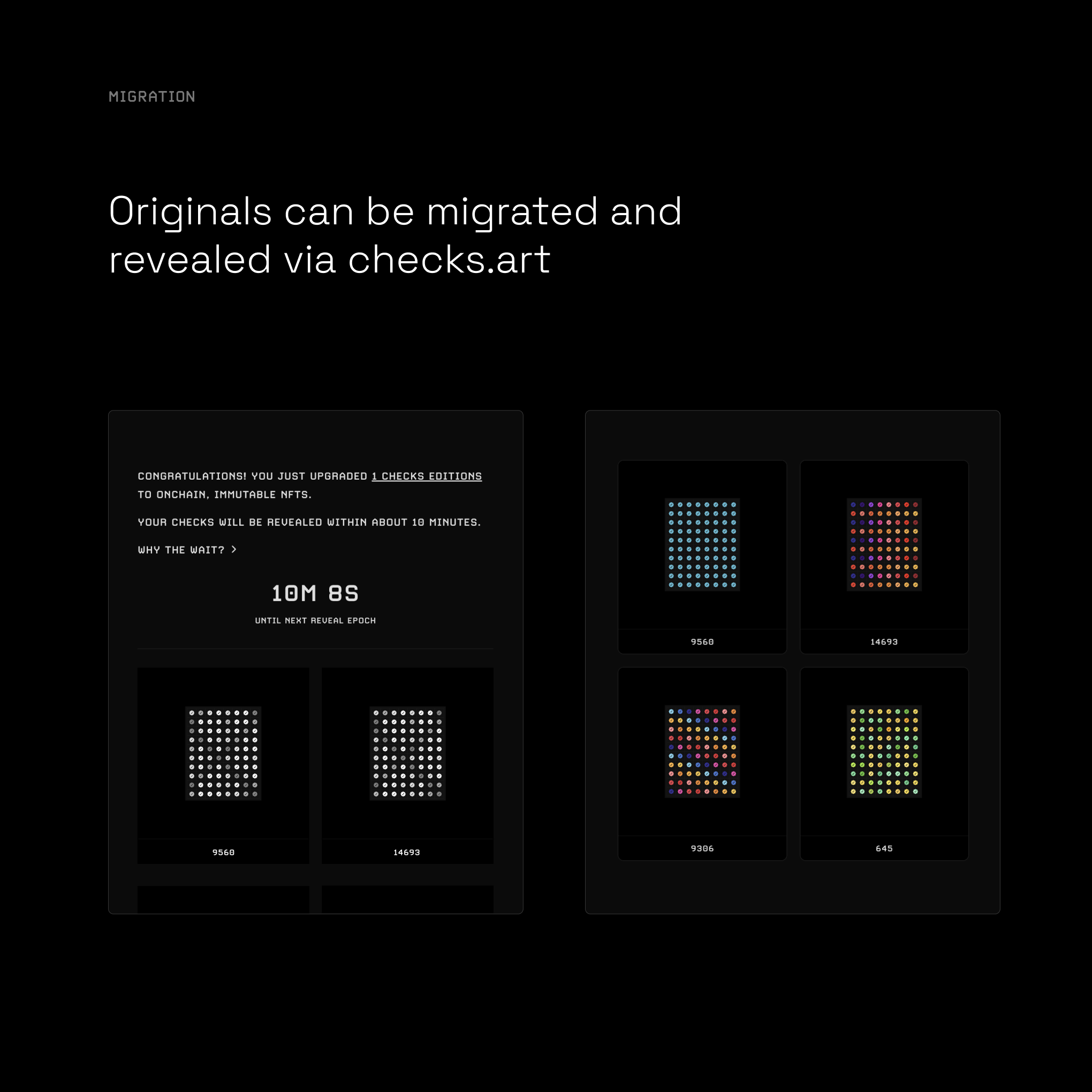
The initial 24-hour open edition produced 16,031 editions of the same image. An edition is a blockchain record associated with the artwork. Its image remains under artist control. On 12 February 2023, a second system opened: a collector could destroy an edition and receive an Original with the same token number.
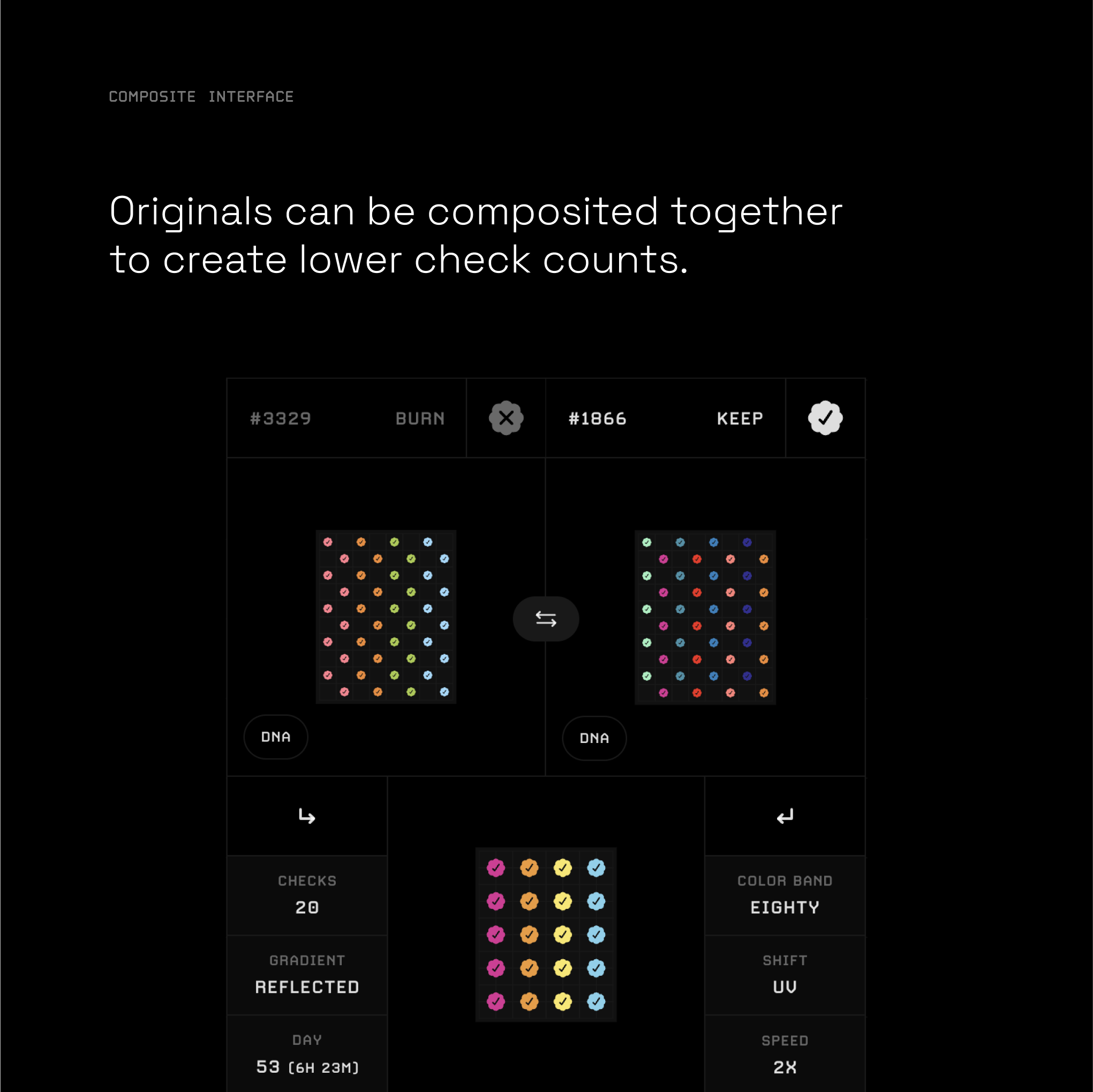
Originals render as animated SVG images using data and code stored on Ethereum. "Immutable" describes that underlying system: it does not mean a collector can never change the work. Its rules allow compositing, which combines works into a surviving token with fewer checkmarks.
Two 80-check Originals produce a 40-check work. The sequence continues through 20, 10, 5, 4 and 1 check. The count is not simply halved at every step. At the final stage, 64 single-check works can form a Black Check, representing 4,096 initial editions. Three is the theoretical maximum.
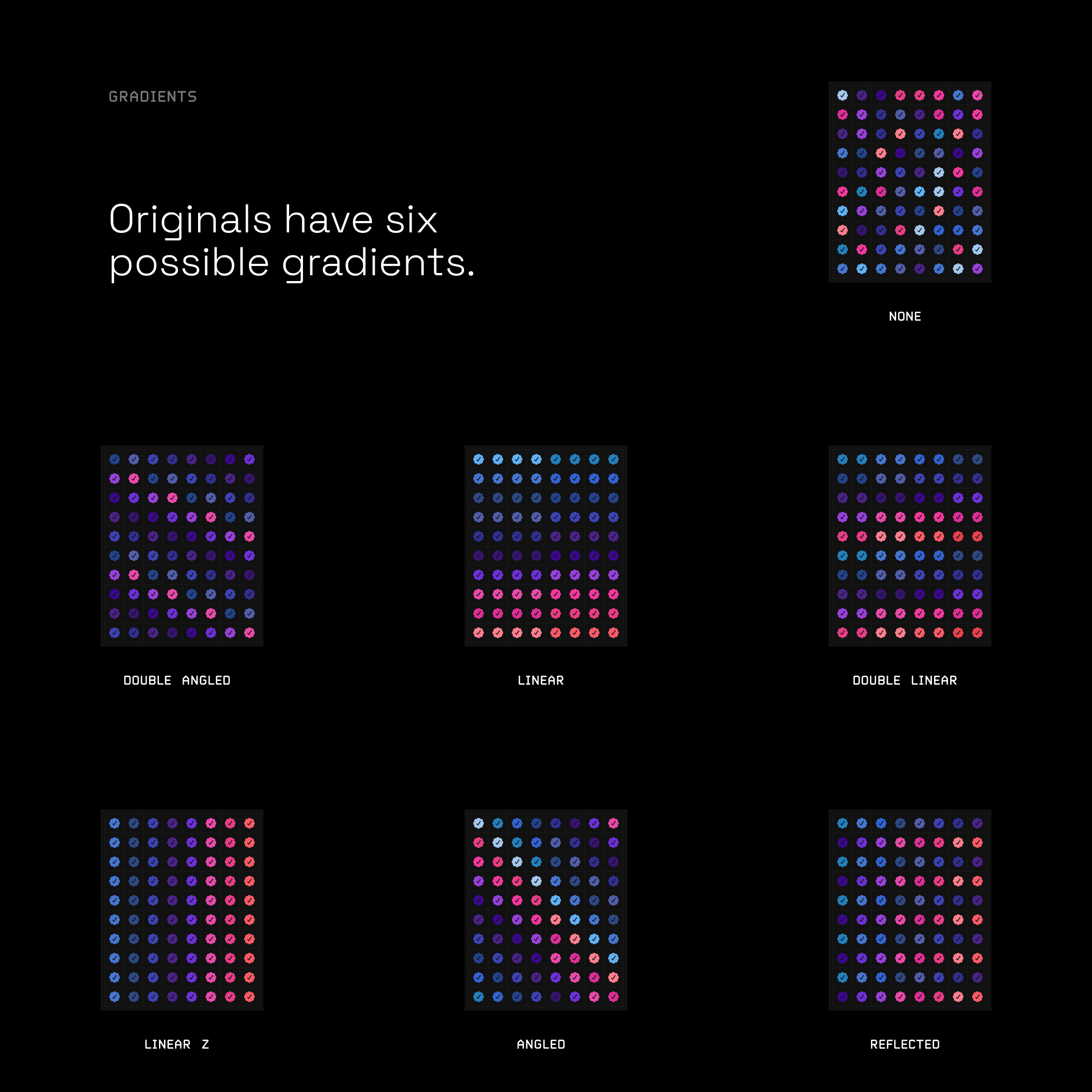
The collector chooses which token number survives. The parent works affect the resulting colors. "Burning" means permanently removing a token from circulation; it does not erase the historical record or prevent someone from copying an image.4,7
What a collector decides
A collector can keep an edition, migrate it, keep an Original or combine eligible Originals. Migration has no deadline. Participation therefore includes the decision to leave a work as it is.
Combining changes an individual image and reduces the number of surviving works. Keeping a work preserves an alternative that another collector might have chosen to destroy. Scarcity is partly an outcome of these choices, rather than only a number announced at the start.
The network becomes a medium because it carries out and records those changes. An image alone cannot show the full work: its transaction history, rules and unexercised choices also matter.5,8
Reading the record
Eric James Beyer's January 2023 report discusses the relationship between paid status and verification. Langston Thomas's February report follows the move to compositing. Beyer emphasizes social status; Thomas follows the practical choices opened by burning and combining works.
The related print project Checks Elements carried the verification question into a different material process. The exhibition record for those prints is documented separately.6,7,9
Development
The $8 open edition begins; 16,031 editions are created. Source
Public notes document rejected ideas and the emerging compositing system. Source
Migration to Originals and compositing become available. Source
Three works from the related Checks Elements project are exhibited at Christie's Rockefeller Center galleries. Source
Images
Notes on the record
Sources and further reading
Artist statements describe intention. Reporting and interviews record different perspectives; exhibition announcements establish specific presentations. How sources are classified.
1. Artist / studio · Selected posts from the downloaded account archive
Checks: an image becomes a set of rules
10 selected posts, through 2023-01-10. Early process notes distinguish the original image, a rejected distribution idea and a developing compositing system. Original wording and links are preserved; headings and notes are editorial. This is artist testimony, not independent verification.
2. Artist / studio · Selected posts from the downloaded account archive
Checks: a stated precedent and a correction
4 selected posts. Butcher names The Currency while developing Checks, corrects the figures he initially used and distinguishes his proposed mechanism. Original wording and links are preserved; headings and notes are editorial. This is artist testimony, not independent verification.
3. Artist / studio · Artist statement
Checks: Intro
The project's account of verification, ownership and authorship. Undated; describes the circumstances of the 2023 launch.
4. Artist / studio · Project documentation
Checks: How it works
Records the 3 January 2023 launch, 12 February migration and compositing rules. This page changes over time; it is not a frozen launch document.
5. Artist / studio · Project documentation
Checks: FAQ
Confirms that migration has no deadline.
6. Independent publication · Reporting with artist interview
How Jack Butcher's Checks Challenges the Way People View NFTs
Contemporaneous coverage of the first edition. Butcher's quoted explanations are artist testimony; the surrounding interpretation is Beyer's.
7. Independent publication · Reporting
Jack Butcher's Checks Are Burning. What's Next?
Reports the February transition to compositing. Its supply figures describe that moment, not the present.
8. Gallery / platform · Artist interview
Checking in with Jack Butcher (Issue #60)
Butcher discusses collaboration with Jalil, collector control and the network as a medium. Published by a digital-art investment business; not treated here as independent criticism.
9. Exhibition record · Exhibitor announcement (PDF)
Jack Butcher: Checks Elements: This Artwork May or May Not Be Notable
Announces three works at Rockefeller Center, New York, 20-23 May 2023, with bidding 16-23 May. Identifies the collaboration with Jean Milant and Cirrus Editions. An auction-house source, not independent criticism.
10. Gallery / platform · Published panel recording
Digital Art Alpha With Jack Butcher, Christie's & 6529 Capital
A Christie's-hosted discussion at Gateway Miami. Date is publication of the recording, not the panel date. Includes artist and market-participant perspectives.