Notes /
Latent
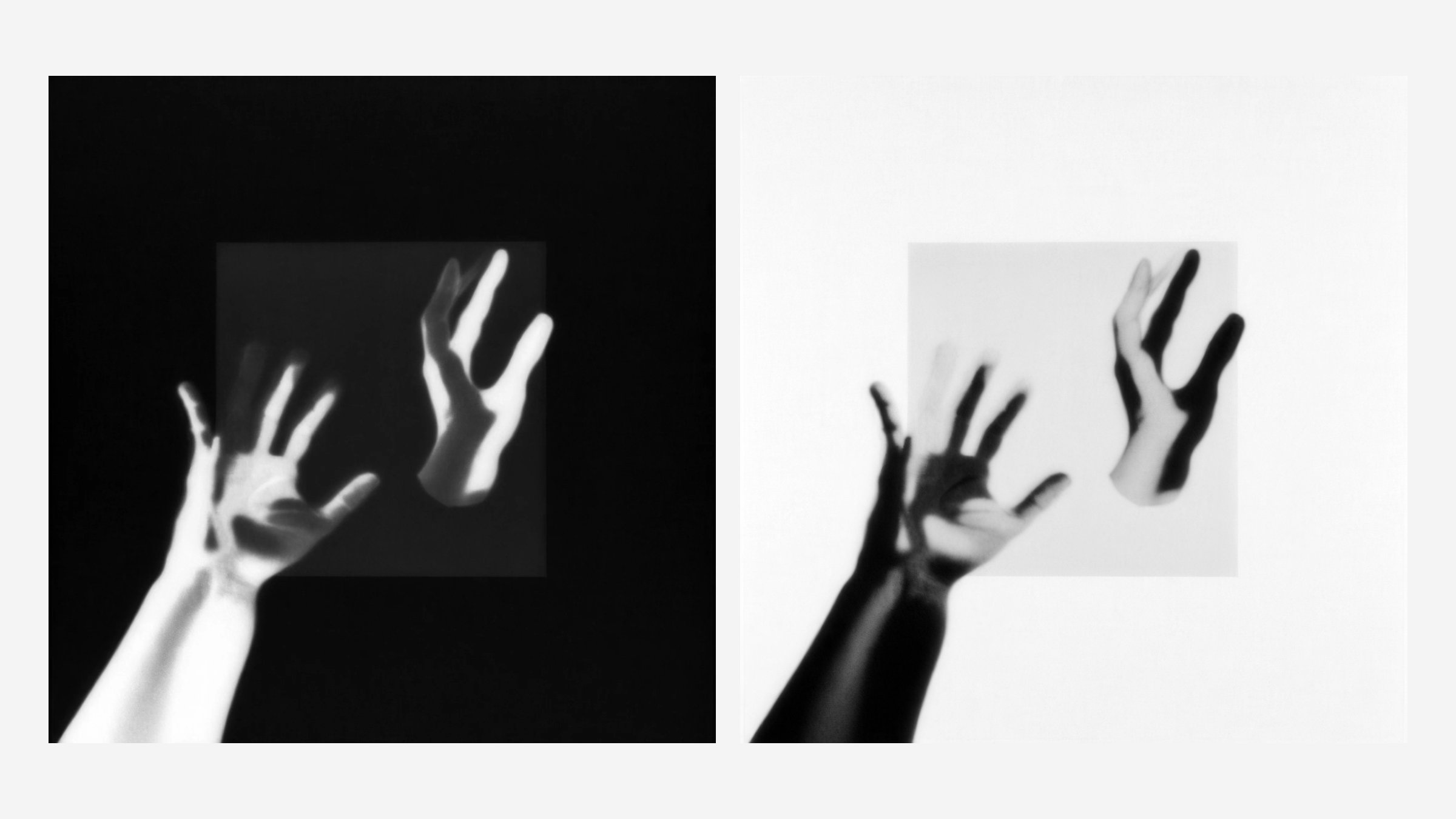
Latent is 80 photographs that were never in a camera. I generated around 8,000 images from text prompts and kept 80, about 1%. Each one became a digital negative, recorded on Ethereum. PICTO printed the positives in Paris, in silver gelatin on baryta paper, 50 x 50 inches, mounted on aluminium. LaCollection showed them at Paris Photo in the Grand Palais in November 2024, a hundred years after André Breton published the Manifesto of Surrealism.
The manifesto is still the best text I know for what this process feels like.
Breton defines surrealism "once and for all" as "Psychic automatism in its pure state." The work is "Dictated by the thought, in the absence of any control exercised by reason, exempt from any aesthetic or moral concern." He gets there through Freud. He describes wanting to obtain from himself "a monologue spoken as rapidly as possible without any intervention on the part of the critical faculties." Then he and Philippe Soupault sat down and wrote that way, and by the end of the first day they had "some fifty or so pages" to compare.
There are instructions too. "Write quickly, without any preconceived subject, fast enough so that you will not remember what you're writing and be tempted to reread what you have written." The first sentence, he says, "will come spontaneously," because there is always "a sentence unknown to our consciousness which is only crying out to be heard."
That is close to what a prompt does. When I was making these I described it as "describing the parameters of a dream, tapping into a subconscious mind much vaster than my own." The model has no taste and no inhibition. It just answers, thousands of times, faster than anyone could reread.
The difference is where the control goes. Breton wanted to get rid of the filter. He called the surrealists "simple receptacles of so many echoes, modest recording instruments," and said they had "made no effort whatsoever to filter." Latent is mostly filter. The automatic part is cheap and endless now. Nearly all of the 8,000 didn't make it. The choosing is the work.
Breton also has a moment where a phrase arrives on its own, "There is a man cut in two by the window," with a faint picture attached. He says that if he were a painter the picture would have mattered more to him than the words, and that it would not be drawing, "but simply of tracing." That is a good description of a negative. Something already there gets fixed onto a surface.
So the name does two jobs. Latent space is where a model's images sit before anyone asks for them. A latent image is the one on exposed film before it is developed. Here the negative is a file, and the development happened in a lab in Bastille that printed for Cartier-Bresson and Capa in the 1950s. Even the titles came out of a machine. A language model suggested them and I picked and edited.
I write the prompt and pick the image. I don't see the rest.
Work: Latent